
The Foundation Everything Else Runs On.
Your automation, security cameras, audio, and lighting all depend on one thing: a network that never drops. We design and install enterprise-grade networks across the South Sound — Ruckus and Alta Labs access points, US-made Island Router, and structured wiring built for every connected device.
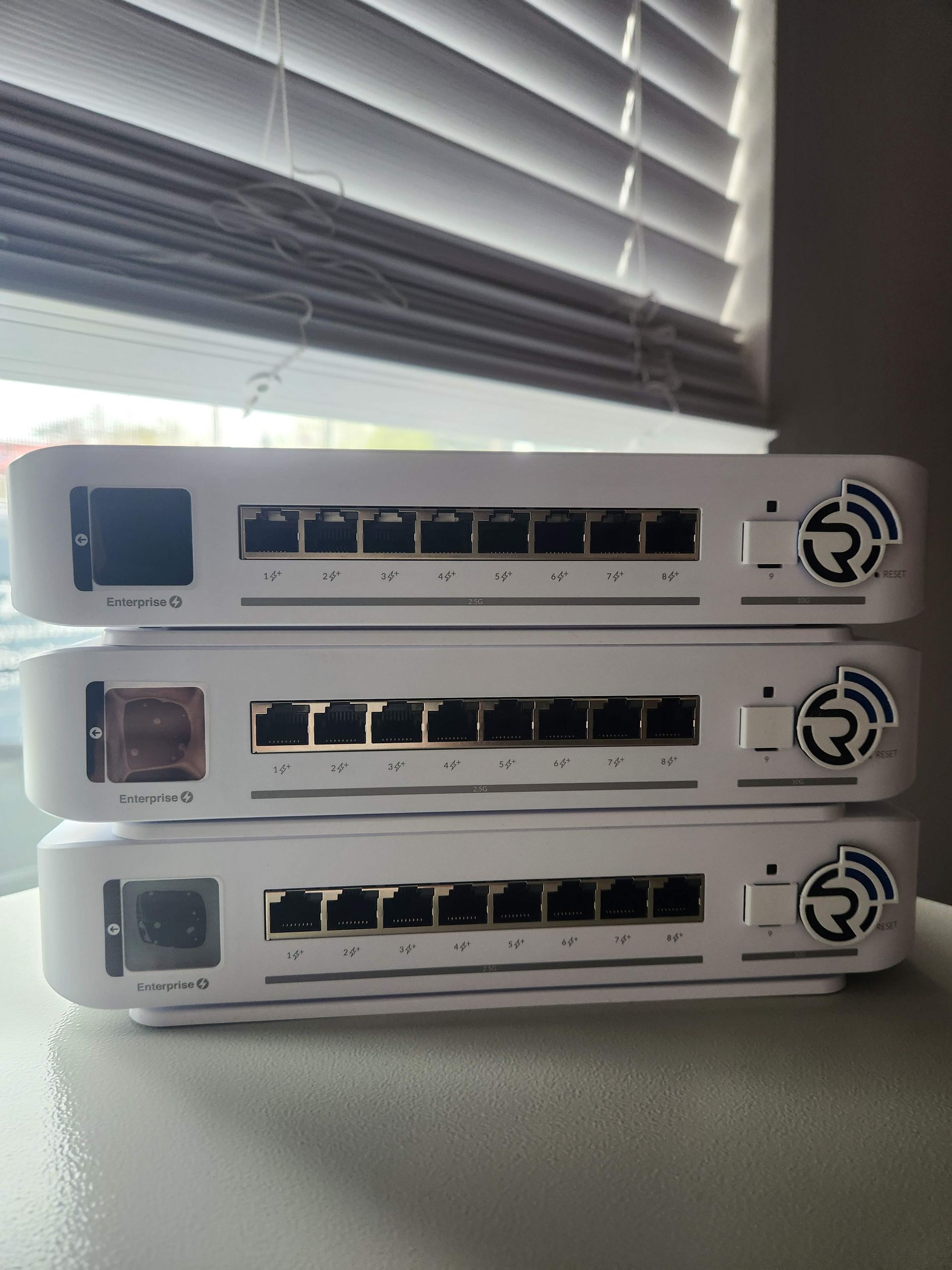
Consumer Routers Weren’t Designed for This
A $150 big-box router was never built to handle 40+ connected devices, 4K streams, security cameras, and a Control4 system simultaneously. Your network is the one system every other system depends on — and it’s usually the weakest link.
Coverage With No Dead Zones
Wired access points, professionally placed after a real site survey — full signal on every floor, the patio, and the shop out back.
- RF planning before any hardware is ordered
- Ethernet-backhaul APs — zero wireless hops, zero speed loss
- Ruckus BeamFlex+ steers signal through difficult construction
- Outdoor and outbuilding coverage included in the design
Routing That Protects and Prioritizes
Island Router — US-manufactured, enterprise firewall, no-queue throughput, and unaffected by the FCC foreign-router ban.
- Enterprise firewall and intrusion protection standard
- Traffic prioritization — cameras never compete with Netflix
- Management app that works from anywhere
- US-made — not on the FCC Covered List
Built as One System
VLANs, QoS, and segmentation configured for your Control4, Ajax, cameras, and audio — because the same team designs all of it.
- Device segmentation isolates IoT and camera traffic
- QoS tuned for automation, streaming, and security
- Documented configuration — labeled, mapped, serviceable
- CURATOR remote care available for proactive monitoring
Big-Box Mesh vs. an Engineered Network
The difference is invisible until the fourth camera comes online — then it’s every day.
| Big-Box Router | Consumer Mesh | Rivas Engineered Network | |
|---|---|---|---|
| Coverage | One floor, maybe | Degrades per hop | Wired APs — full signal everywhere |
| 40+ devices | Chokes | Struggles | Engineered for it |
| Security | Basic WPA | Basic WPA | Enterprise firewall + segmentation |
| FCC router ban | Likely affected | Likely affected | Island Router — US-made, exempt |
The FCC banned all new foreign-made consumer routers. TP-Link, Netgear, Eero, and Google Nest are all affected — foreign routers lose security-update eligibility by March 2027. Island Router is US-manufactured and not on the Covered List. Read the full breakdown →
Dead Zones Don't Exist When the Network Is Designed Right.
Consumer mesh systems create dead zones in any home with thick walls, multiple floors, or a garage. Wired access points — run from Ethernet back to your rack — deliver full signal everywhere with zero degradation.
Consumer Mesh
Wired Access Points
From a Single-Room Fix to Full Structured Wiring
We design networks that handle everything your household runs — today and for years to come.
Whole-Home WiFi Design
Site survey, RF planning, and professional access point placement to eliminate every dead zone — all floors, outdoor spaces, and outbuildings.
Island Router Deployment
Enterprise-grade routing with best-in-class firewall, intrusion protection, and no-queue throughput — with a management app that works from anywhere. Learn about the Island Router →
Wired Access Points
Ethernet-backhaul APs from Ruckus, Alta Labs, and Ubiquiti UniFi — no wireless hops, no speed degradation. We match the hardware to your project.
Structured Wiring & Fiber
Cat6A and fiber-optic cabling through walls, ceilings, and attics — future-proof infrastructure inside your walls.
Network Rack & Panel Build
Clean, organized rack installs with PoE switches, patch panels, UPS backup, and proper cable management — built for easy service.
Smart Home Integration
VLANs, QoS, and device segmentation configured for your lighting, security, and automation — because we designed them together.
Hardware We Trust
Every component is selected for reliability, performance, and long-term support. No commodity hardware.
Ruckus
BeamFlex+ adaptive antenna technology — dynamically steers signal to each device for optimal reception in challenging environments.
Island Router
US-manufactured. Enterprise routing, best-in-class firewall, no-queue throughput. Not on the FCC Covered List.
Alta Labs
Wi-Fi 6 access points and PoE switches. Multi-Pass technology for intelligent traffic management and channel optimization.
Structured Cabling
Cat6A and fiber-to-jack infrastructure — 10Gbps+ capable, run clean and terminated to spec by our licensed crew.
Certified. Experienced. Local.
We're Not Just WiFi & Networking Installers
- Ruckus & Alta Labs Certified — Certified on the enterprise platforms we deploy — plus Ubiquiti
- Island Router Certified — US-manufactured enterprise routing — deployed and supported locally
- Licensed & Local — WA Lic. RIVASGL799DR — structured wiring done to code
- Local South Sound — Kent-based, serving Pierce & King counties
- "Designed Together. Built to Disappear" — Our brand promise: work invisible, impact visible
- Free in-home consultation — Measure, specify, quote. No surprises.
- Professional installation — Your system works perfectly from day one
- Full support team — Same people who built it answer your calls
Recent WiFi & Networking Projects
Real installs for real South Sound businesses and homes.
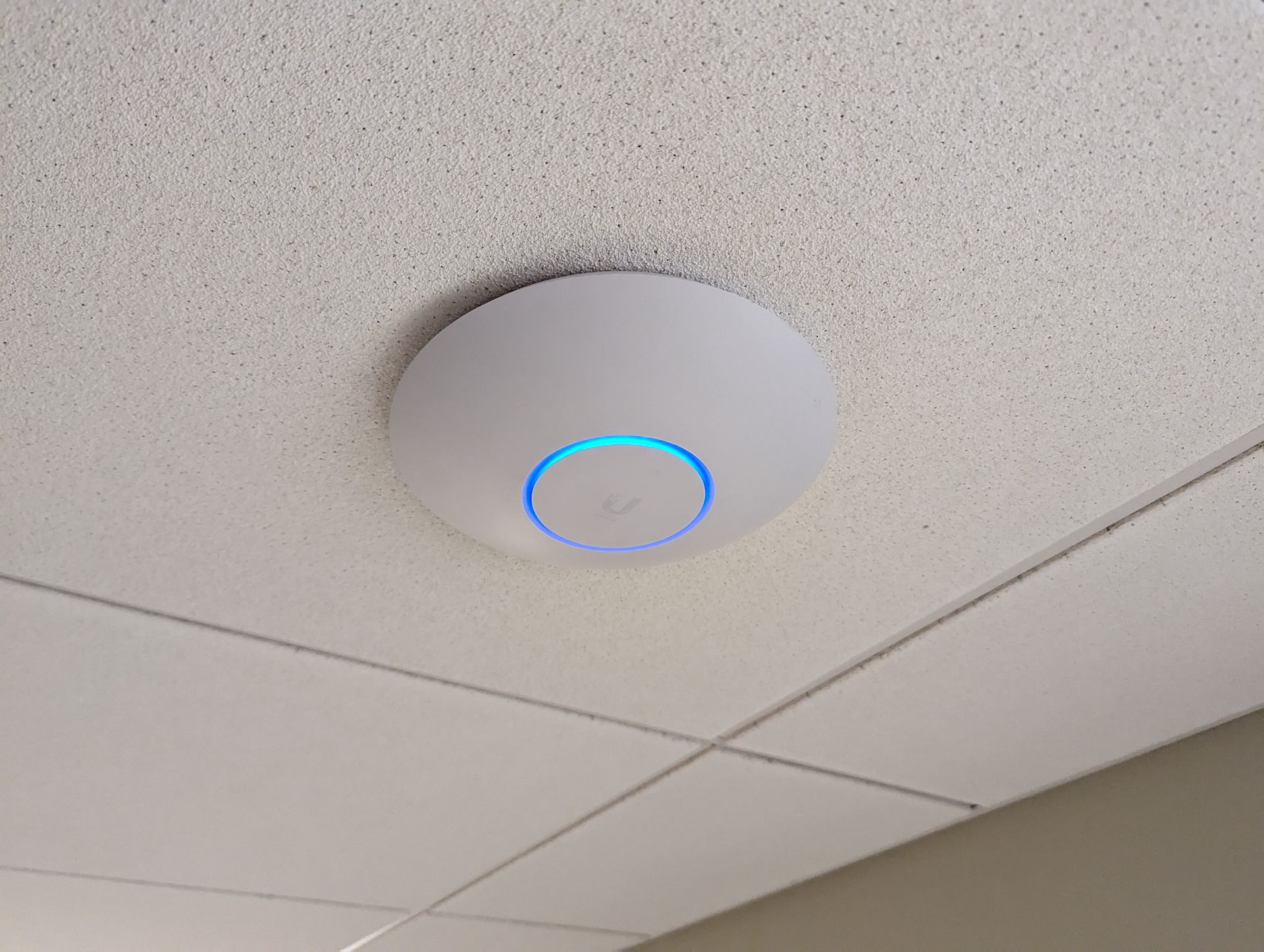
Washington Pottery Company
Enterprise routing, WiFi, and VoIP with CURATOR remote support — the network stays up and every call connects.
View Project →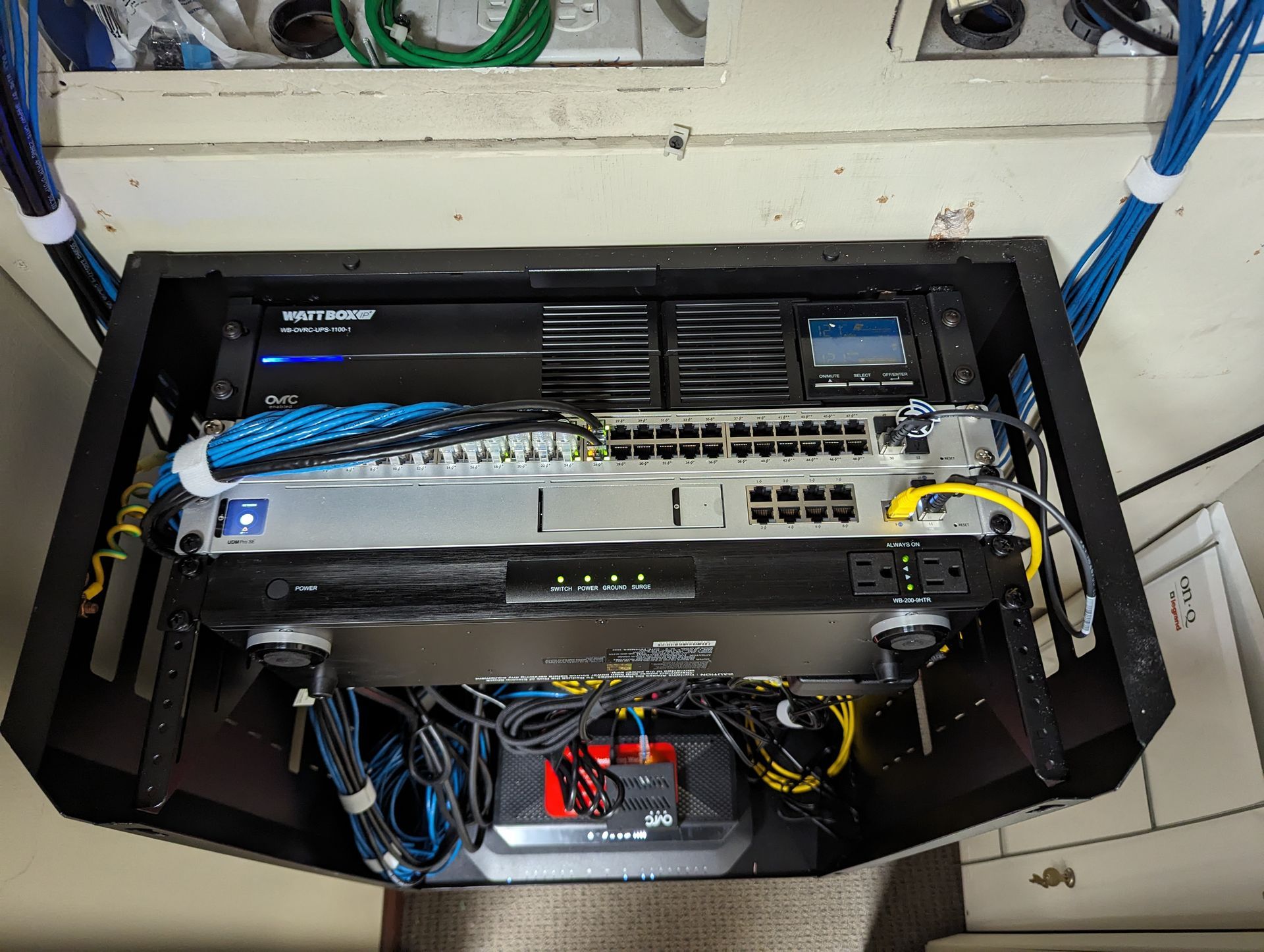
South Sound Law Group
Secure enterprise network rebuild with cloud remote support — reliable connectivity after years of provider frustration.
View Project →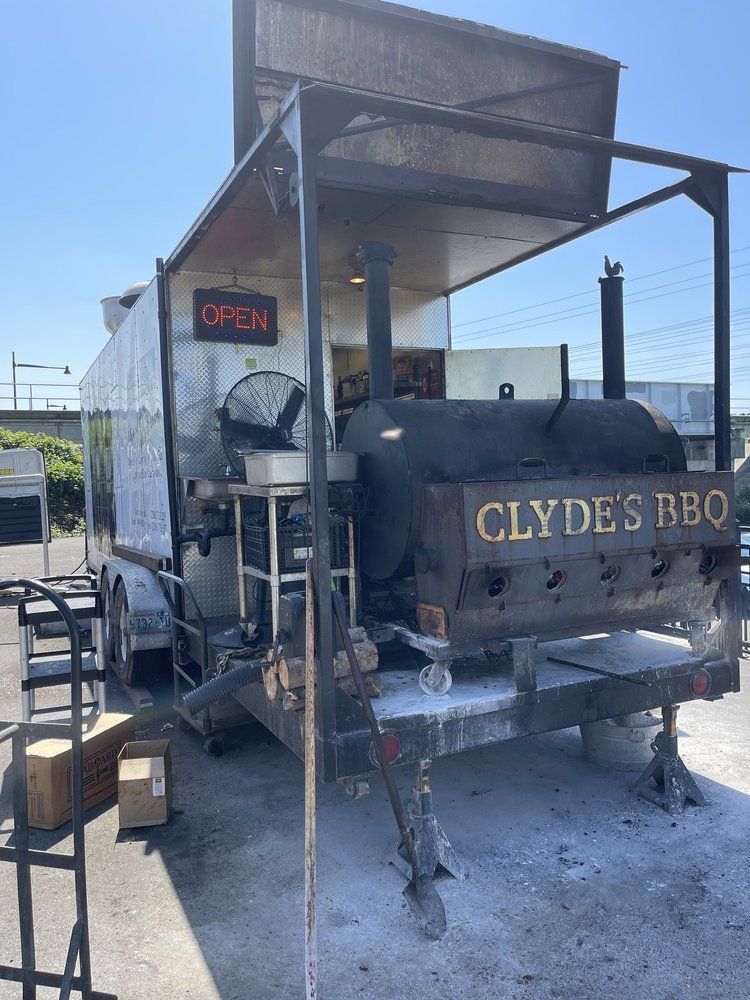
Clyde's Southern Wood Fired BBQ
AI-powered Ajax surveillance that ended theft losses — and the false alarms that came with the old system.
View Project →Design. Install. Support.
1. Design
Free network assessment: site survey, RF planning, device inventory, and a design that covers every floor and outbuilding. Fixed proposal, tax included.
2. Install
Our in-house crew runs the structured wiring, builds the rack, mounts the access points, and configures routing, VLANs, and QoS — clean, labeled, documented.
3. Support
The team that built your network answers when you call. Add CURATOR remote care for proactive monitoring — most issues fixed before you notice.
Learn Before You Buy
The research most homeowners wish they'd read before their third mesh system — written from real South Sound installs.
Mesh WiFi vs. Wired Access Points
The comprehensive guide to choosing the right WiFi architecture for your home or business — and why mesh disappoints in PNW construction.
The FCC Router Ban, Explained
TP-Link, Netgear, Eero, and Google Nest are affected. What the March 2027 security-update deadline means for your home.
Island Router — Full Review
Is it worth it for smart homes? Our hands-on review from Tacoma-area installs, plus the dedicated Island Router page.
WiFi & Networking FAQs
Smart homes run dozens of connected devices — from Control4 processors and security cameras to smart lighting and voice assistants. Consumer routers can't reliably handle this load. Professional networks use wired access points, enterprise-grade routers like the Island Router, and structured cabling to deliver consistent, lag-free performance across your entire property.
The Island Router by PerfTech is an enterprise-grade home router engineered for smart homes. It features built-in firewall and intrusion protection, centralized network management, automatic traffic prioritization for critical devices, and seamless integration with Control4, Ajax Systems, and other smart home platforms. It's designed, assembled, and supported in the USA.
Mesh WiFi uses wireless communication between nodes, which introduces speed degradation and latency. Wired access points connect via Ethernet cable to deliver the fastest, most reliable connection possible with no signal loss between nodes. For smart homes with automation, security cameras, and streaming, wired access points are the professional standard.
Rivas Technology Group serves Tacoma, Puyallup, Gig Harbor, University Place, Bonney Lake, and the greater South Sound region of Washington State.
If it’s a TP-Link, Netgear, Eero, Google Nest, or most other consumer brands, very likely yes — the FCC’s March 2026 action bans new foreign-made consumer routers, and affected hardware loses security-update eligibility by March 2027. The Island Router we deploy is US-manufactured and not on the Covered List. We can assess your current hardware during a free network assessment.
Usually, yes. Many dead-zone fixes involve one or two strategically placed wired access points, which we can often reach through attics, crawl spaces, or existing conduit with minimal disruption. A site survey tells us exactly what your home needs — sometimes it’s a single AP, sometimes structured wiring makes more sense long-term.
Ready?
Let's talk about what WiFi & Networking can do for your South Sound home — and your comfort, energy bills, and lifestyle.
Schedule Your Free Consultation →Or call us at 425-954-6003| Based in Kent, WA