Smart home
Why do smart devices need one control system?
Because the devices were never designed to work together, so each one is automated and none of them is aware of the others. Here is what fragmentation costs, what a unified system does instead, and how to tell which one you have.
Because the devices were never designed to work together, so each one is automated and none is aware of the others. The result is five apps, cloud dependence and automations that stop for no reason. One control system such as Control4 gives them shared context, and Rivas Technology Group builds that in Kent and across the South Sound.
By Ivan Rivas, Owner and Sales Engineer · 2026-04-06 · Updated 2026-09-17

Why do smart devices end up as a graveyard of good intentions?
Because each one was bought alone. A smart speaker, then a thermostat, then bulbs on sale, then a doorbell camera because the neighbor got one. Each purchase made sense in isolation, and no one designed them to work together: each has its own app, its own cloud and its own routines.
The result, in most houses Rivas Technology Group is called to, is a thermostat that does not know the lights went off. It is bulbs that lose their schedule when the power flickers, and a doorbell that notifies one phone and not the other. And it is a voice assistant that controls some devices and never remembers which. That is not a technology problem. It is a fragmentation problem, and it is one of the most common things we fix.
What does fragmentation actually cost?
Awareness, which is the whole point. Intelligence requires context: a thermostat cannot make a good decision if it does not know whether anyone is home, whether the shades are open or whether the schedule changed. A security system cannot act intelligently if it does not know the lights went off an hour ago and no motion has been seen since. Devices working in isolation are automated; they are not smart. A smart home is not a collection of smart devices. It is a system where every device knows what the others are doing and acts on it.
DIY or professional integration: what do you get?
The honest comparison is not about which devices are better. It is about what you live with every day once they are strung together.
| What you are evaluating | DIY smart home | Professional integration |
|---|---|---|
| Control | Several apps, several logins | One interface for every system |
| Automations | Per device, limited logic | Cross-system, event driven |
| Reliability | Cloud dependent, drops offline | Local processing, keeps running |
| Troubleshooting | Your problem, your evening | We own it, we fix it |
| Growth | Add devices, add complexity | Add devices, same experience |
| Resale | Buyer sees clutter | Buyer sees a system |
The row that matters most is troubleshooting. With DIY, every dropped connection, every firmware update that breaks a routine and every device that falls off the network is yours to solve; you are the integrator. With a professionally installed system, that is our job, and after the install support is where it lives.
What does one control system look like?
Take leaving for work. In a fragmented home you arm the alarm by hand, hope the thermostat notices you are gone and wonder whether the garage closed. In a unified home your phone leaves the geofence, the system arms the Ajax alarm, sets the climate to away, confirms the garage is closed and sends one notification. You did not open an app. That is not a feature. It is a design outcome. It happens because security, climate, lighting, shades and access all connect to one platform that understands context and runs logic across them at once.
Why does the platform matter?
Because it decides what is possible, now and in five years. The consumer market says interoperability is solved and a unified home is a few downloads away. Interoperability has improved: devices that could not talk now can. But interoperability and integration are different things. Interoperability means devices can technically communicate. Integration means they are designed, programmed and maintained to behave as one system, with reliable automations, a consistent interface and someone who owns the outcome.
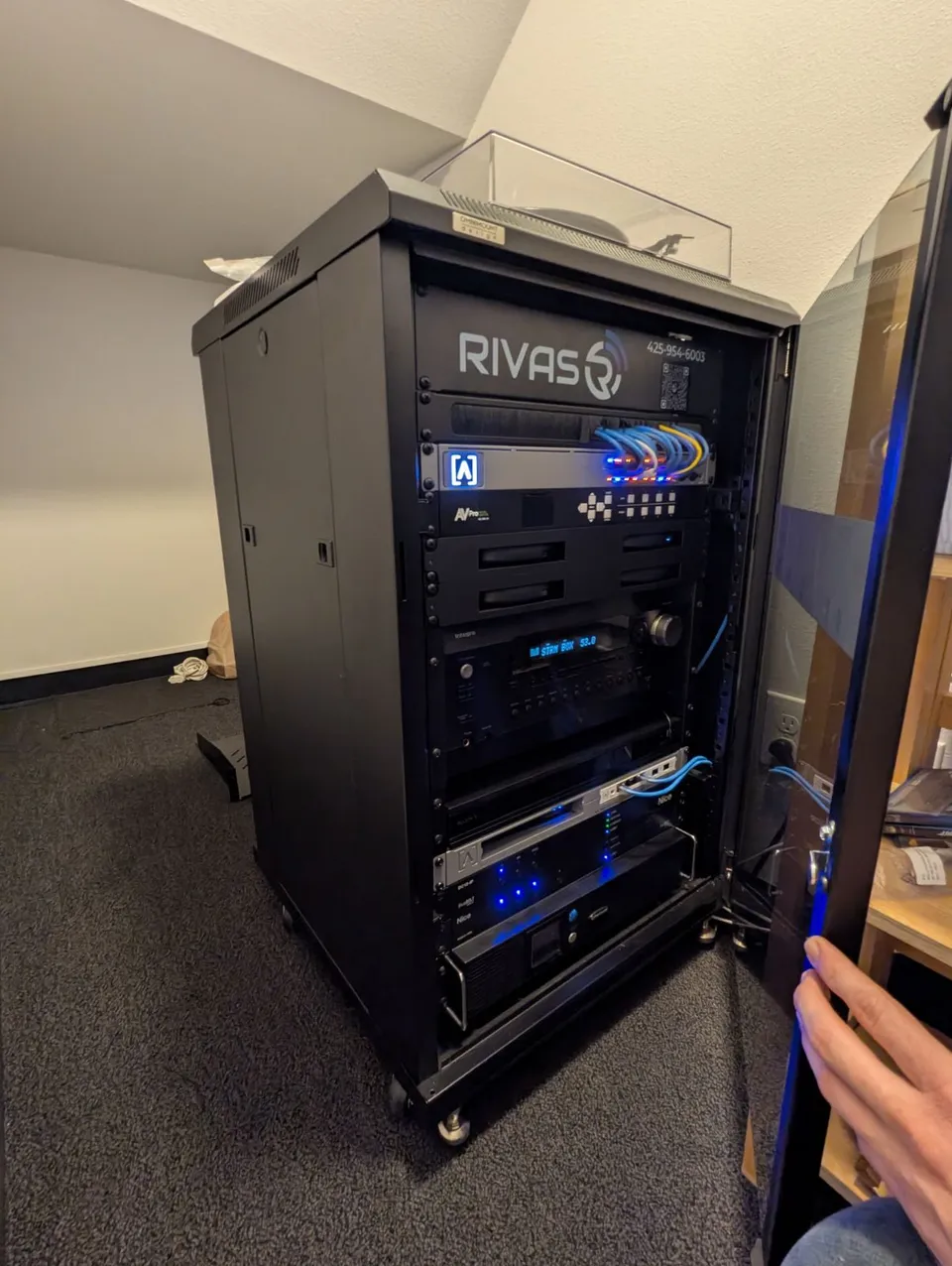
We build on Control4. It runs in over 500,000 homes, works with 25,000+ third-party products and is installed through nearly 6,000 authorized integrators (Control4). We are a Control4 Authorized Dealer, listed on Control4's integrator map. It is not a box from a big-box store; it is installed and programmed by a dealer, which is why it works the way it does. A well-built Control4 system does not get harder to manage as it grows. Voice through Josh.ai sits on top; a wired network on an Island Router sits underneath.
Signs your smart home needs real integration
If any of these are familiar, you have fragmentation:
- You switch between more than two apps to run the house.
- Automations work sometimes, then stop, and you cannot say why.
- You have had to explain the system to a house sitter or a relative.
- Adding a device meant researching compatibility first.
- The house goes dark when the internet does, even for basics.
- You gave up on automations that seemed too complicated to keep working.
None of this is permanent. A fragmented home can be assessed, redesigned and rebuilt around one platform, starting with a design consultation. We have done it in houses in Kent and Tacoma with a dozen incompatible devices that now run without attention. What drives the cost is how many devices are worth keeping, how many rooms join the system and the state of the network. The instant quote gives a figure in minutes.
Need it installed?
Rivas Technology Group designs and installs unified smart home automation on Control4 from Kent across south King County and Pierce County. Tell us what you have and what frustrates you, and we will show you what one system looks like in your house.