
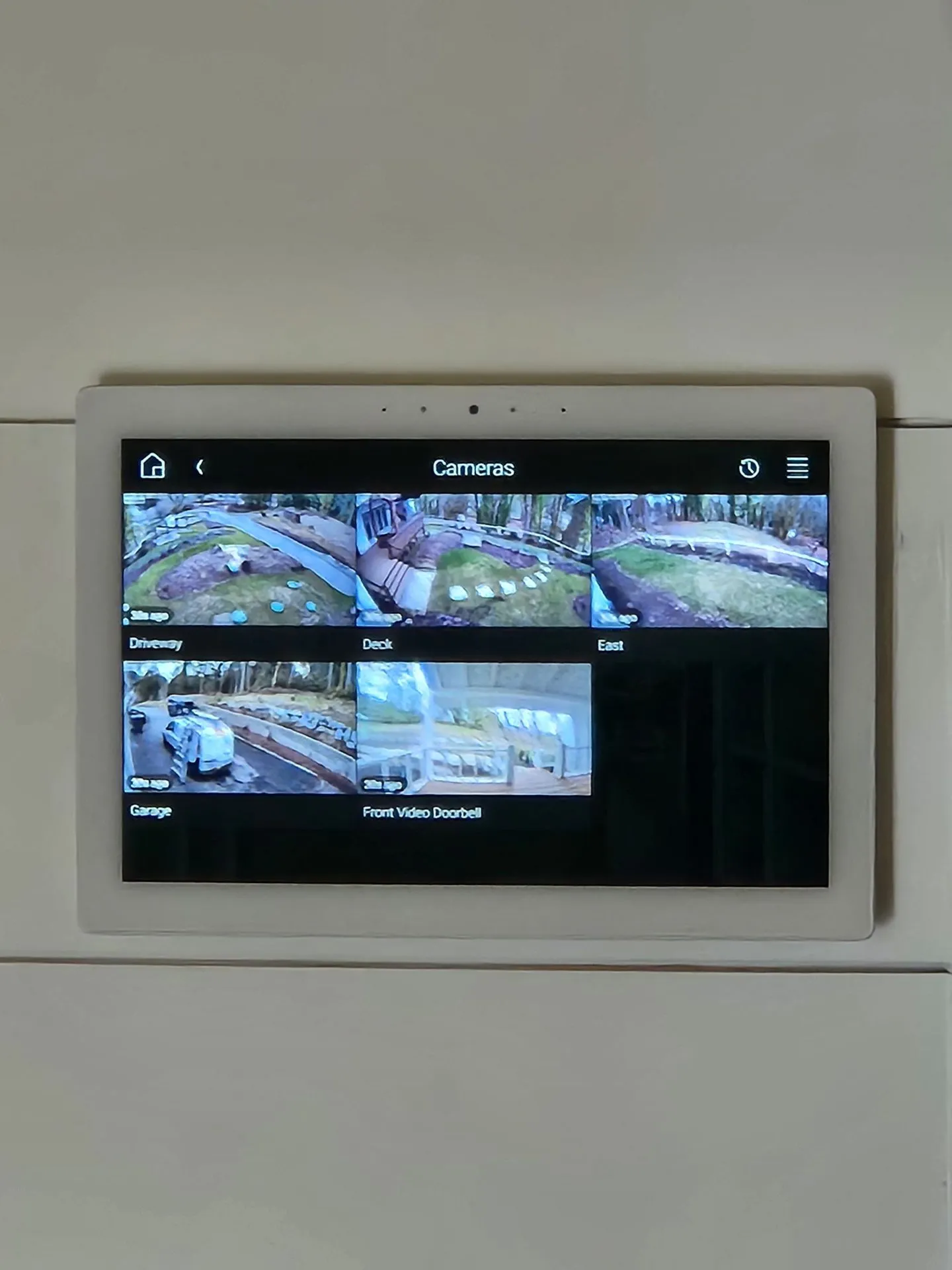
AI smart home, Kent WA and the South Sound
What AI does in a home,
and what it does not
A plain account of the intelligence inside the systems we install in south King County and Pierce County, written for a homeowner deciding what to buy. No assistant on a counter is the point; the cameras, the thermostat and the alarm are.
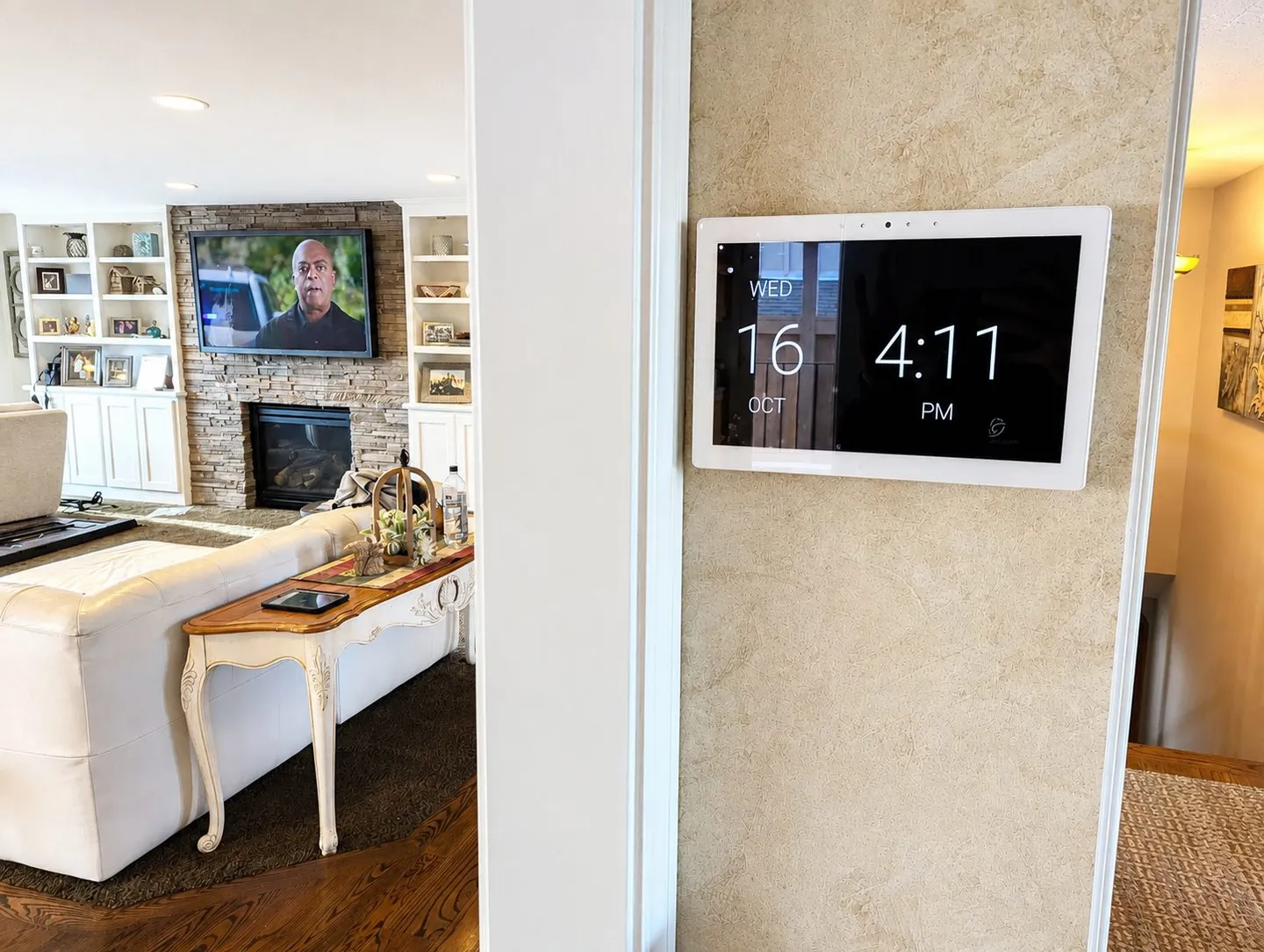


In a professionally installed home, AI means cameras that classify a person, vehicle or animal on the device, and a thermostat that learns when rooms are occupied. It also means alarms verified by photo, video you can search by object, and voice processed in the house. Rivas Technology Group installs these across Kent, Tacoma and the South Sound.
- Response
- We call or text back within one business day
- Cameras
- Person, vehicle and animal classification on the device
- Alarms
- MotionCam first photo within 9 seconds; monitoring by Becklar, a UL-listed central station
- Voice
- Josh.ai dealer since 2023
- Automation
- Control4 Authorized Dealer, listed on Control4's integrator map
- License
- WA electrical contractor RIVASGL799DR, bonded, insured
What does AI do in a home?
It classifies, predicts and verifies on devices you already need, and it stays out of the way. A camera decides on the device whether the motion in the drive is a person, a vehicle or a raccoon. Your phone buzzes for the first and not the other two. A thermostat learns which rooms are occupied at which hours and conditions them ahead of you. An alarm detector takes a photo series when it trips, so you and the monitoring operator see what happened before anyone calls the police.
A recorder lets you search a week of video for "vehicles between 10 p.m. and 6 a.m." A voice device understands "turn off everything except the hallway" and processes the sentence in the house. None of it looks like a robot; it looks like a house that raises fewer false alarms and is the right temperature when you walk in. Every one of these runs on systems we install across the residential work we do.
What is not AI?
A speaker on the counter, a scene you programmed, and a thermostat schedule you typed in. Alexa and Google Home are command-and-response assistants that send your voice to a remote server; they execute, they do not learn the house. A "Goodnight" scene is automation, which is useful and deterministic, but it is logic you wrote.
Most of what is sold as an AI home is one of these two things with a new label. The honest picture for 2026 is a hybrid: a Control4 system running the explicit logic, with intelligent devices at specific points adding what logic cannot. The distinction is worked through in smart home vs. AI home and what AI actually does in a smart home.
Where does it show up in the systems we install?
In security first. Ajax cameras classify people and vehicles on the device. MotionCam detectors deliver the first photo of an alarm within 9 seconds1, so a verified alarm goes to Becklar, a UL-listed central station, with pictures attached. Ajax LeaksProtect detects water and WaterStop closes the main supply without waiting for a person. Luma recorders index footage by object so you search instead of scrub. In climate, Ecobee Premium learns occupancy from room sensors and carries PM2.5 and CO2 readings into the same Control4 screen as the temperature.
In lighting, tunable fixtures shift color through the day, which is covered on smart lighting. In entry, an ekey fingerprint reader recognizes a person and fires an arrival scene, disarms the alarm and sets the climate at once. In voice, Josh.ai processes speech on hardware in the house; we have been a Josh.ai dealer since 2023. Control4 is the layer that puts all of it on one interface and lets a camera event turn on the lights. The six examples in how AI is already working in South Sound homes and Ajax as an AI security platform go deeper.
What is under the homeowner's control?
Everything that watches. Camera classification runs on the device and nothing is reviewed by a person unless you or the central station open an alarm clip. Josh keeps no recordings. Access logs, occupancy data and video stay on hardware in the house or in accounts you own. Every surveillance feature is opt-in, set with you during programming, and switched off on request. That is the standard on residential security and across the security hub.
Where do you start?
From the house you have, the house you are building or the house you are remodeling. A finished home takes Ajax security and cameras without opening walls, an Ecobee in place of the old thermostat, and Josh Micros on the counter. The page how to add AI to a home you already own walks through it.
New construction is the time for conduit, rack space and a network that can carry edge devices for a decade, which is why builders are specifying AI-ready systems. A remodel gets a wireless-first plan with cable only where it earns the disruption, sequenced with your contractor.
What drives the cost?
How many of these systems you want, the size of the house, and whether the walls are open. As of September 2026, an AI-capable system in the South Sound covering automation, security with classifying cameras, networking and occupancy-based climate starts around $25,000. A typical range is $25,000 to $50,000 for a 2,000 to 3,000 square foot home as of the same date. That includes the controller, network, hub and detectors, cameras, thermostat and programming, and the price scales with depth and product choice.
Every project is a fixed price before work begins. Ranges with inclusions are on smart home installation cost, and the instant quote gives a figure in minutes. The category page is smart home automation.
Where do we install it?
South King County and Pierce County, from 415 Railroad Ave S in Kent. That includes Kent, Renton, Tukwila, Federal Way, Auburn, Covington and Maple Valley, Tacoma, Puyallup, Sumner, Bonney Lake, Tehaleh, University Place and Gig Harbor. Olympic Peninsula by appointment. Ajax Systems dealer, listed on ajax.systems; Control4 Authorized Dealer, listed on Control4's integrator map; WA electrical contractor license RIVASGL799DR2; 5.0 from 49 Google reviews. We call or text back within one business day, and the walk-through is free within 20 miles of Kent.
Questions we hear
What does AI do in a smart home?
Four things you notice. Cameras tell a person from a deer or a package on the device, and a thermostat learns when rooms are occupied. Alarms arrive with a photo so a passing car does not wake the house, and video search works by object instead of scrubbing. Voice is the fifth when it is processed in the house.
Is Alexa AI?
It is a command-and-response assistant that sends your voice to a remote server. It does not learn your house, and it is not what makes a home intelligent. Josh.ai processes speech locally and understands whole sentences, which is the voice layer we install.
Is Control4 AI?
Control4 is the automation platform that runs the logic you set. Its role with AI is to surface the intelligent devices, cameras, thermostats, locks and the alarm, on one interface and let one event drive another system. The intelligence lives in those devices.
Does the AI work if the internet goes down?
The parts that run on the device do: camera classification, the Ajax hub and detectors, local automation and Josh voice. Remote app access, cloud video search features and off-site notification need the connection back, and the Ajax hub keeps reporting over cellular in the meantime.
What does an AI-capable home cost?
As of September 2026, an AI-capable system in the South Sound covering automation, security with classifying cameras, networking and occupancy-based climate starts around $25,000. A typical range is $25,000 to $50,000 for a 2,000 to 3,000 square foot home as of the same date, and the price scales with depth and product choice. Every project is a fixed price.
Can this go into a house I already own?
Yes. Ajax security and cameras install without opening walls, and an Ecobee replaces the thermostat you have. Cameras run on the existing network or new PoE drops, and Josh Micros sit on a counter. A Control4 controller and rack go where cable reaches.
Who watches the cameras?
You do, and the central station does only when an alarm fires with photos attached. Classification happens on the camera; nothing is reviewed by a person unless you or the station open it. Every surveillance feature is opt-in and under your control.
Start with a walk-through.
Tell us what you want the house to notice: who is at the gate, when a room is empty, when a pipe leaks. We come out and send a fixed proposal. We call or text back within one business day.