

Solar surveillance trailer lease, Kent WA and Washington State
Solar surveillance trailer lease.
A camera mast that goes where the job goes.
A solar surveillance trailer with mast cameras, leased from the Rivas Technology Group fleet for job sites, yards, lots and events in Kent, Tacoma and across Washington. We tow it in, level it, raise the mast and confirm coverage on your phone before we leave.
The fixed tower, and the permanent system the site becomes.


Rivas Technology Group leases solar surveillance trailers from its own fleet to Washington job sites, yards, lots and events, delivered, plated and set up from Kent. As of September 2026 the solar trailer leases at $2,195 a month on a three-month term and the hybrid trailer at $2,695; Becklar monitoring adds $449 a month.
- Offer
- Monthly lease from the Rivas Technology Group fleet; the trailer is not sold
- Lease
- Solar trailer $2,195 a month on a three-month term, $2,595 month to month; hybrid trailer $2,695, as of September 2026
- Delivery
- $450 round trip inside 20 miles of Kent, then the mobilization bands on the pricing page
- Mast
- 22 ft (7 m) telescopic steel mast, rated to 62 mph wind
- Cameras
- Three PTZ cameras on the mast as standard; fixed, thermal or license-plate cameras on request
- Power
- Solar unit: two 440 W panels, 8 kWh lithium iron phosphate battery. Hybrid unit: three 435 W panels, 11.8 kWh battery, built-in 2 kW gasoline generator with auto start
- Connection
- Cellular router on the trailer, SIM and data included in the lease; two Cat6 runs up the mast; remote battery monitoring
- Monitoring
- Optional, month to month, through Becklar, a UL-listed central station
- Road
- Titled and plated in the company's name; towed and placed by our team
- Theft protection
- Hitch lock, wheel lock and GPS tracker on every unit
- Lead time
- Set after the site call; depends on unit availability and your start date
What is a solar surveillance trailer?
A towable trailer that raises cameras on a mast and powers them from its own solar panels and battery. Typical published units carry two to four cameras on an 18 to 30 ft mast with roughly 640 to 1,350 W of solar123. It needs no power run, no trenching and no electrician. The units in the Rivas Technology Group fleet carry a 22 ft telescopic steel mast on a single-axle trailer, raised by hand and rated to 62 mph wind. They have four stabilizer legs and a 2-inch ball hitch4 (ENS Security SG-008 and SG-009 spec sheets).
The cameras watch for people and vehicles, and the alert with video reaches your phone. Rivas Technology Group leases the trailer from its own fleet by the month, tows it to your site and sets it up. The unit spec is in the facts list on this page. When the site becomes a building, the permanent cameras, access control and monitored alarm are on business security.
Where does it work?
Anywhere one camera on a mast covers what several ground cameras cannot. Construction sites, where the laydown area, the perimeter and the equipment move with the phases. Laydown and equipment yards with machinery, fleet vehicles and material stacks. Dealership and event overflow lots without light-pole power. Festivals, fairs and events, delivered before the gates open and removed after.
Public works staging areas and work zones along a road. Farm yards, irrigation equipment and outbuildings. RV and boat storage with high-value assets and no wiring. In each case the trailer is towed in, leveled, the mast raised, and the coverage confirmed on the app before we leave.
Tower or trailer?
The tower is a ground unit with three cameras at eye level that meshes with other towers. It suits perimeters, gates, farms and lots that stay in one place for a season or longer. The trailer lifts its cameras on a mast and tows behind a truck.
It suits a large open yard, an event, a work zone or a site that moves every few weeks. Rivas Technology Group sells and leases the solar security tower and leases the trailer from its own fleet. A walk-through settles which one your site needs. A large site often runs a trailer in the open ground with towers on the fence line.
What does the lease cost?
As of September 2026, the rates below. Cellular data, the SIM, remote battery monitoring, hitch and wheel locks and the GPS tracker are in every rate. A site call of about an hour confirms placement and puts the rate in writing.
| Item | Rate, as of September 2026 |
|---|---|
| Solar trailer, 22 ft mast, three PTZ cameras, 30-day event retention | $2,195 a month on a three-month term; $2,595 month to month |
| Hybrid trailer with built-in generator, for winter and shaded sites | $2,695 a month on a three-month term |
| Professional monitoring through Becklar, a UL-listed central station | $449 a month, month to month |
| Delivery, setup and pickup, round trip | $450 inside 20 miles of Kent; 20 to 35 miles adds $150, 35 to 50 miles adds $250, beyond that quoted |
| Move on site between phases | $250 per move |
| Event or short term | $795 a week, one-week minimum, delivery billed as above |
| Deposit | $1,000 refundable, or a damage waiver at 10 percent of the monthly rate |
Two things change the rate from the table. A right-of-way permit is priced into delivery where the city requires one. A site with power to top up the battery can run the solar unit through winter without the hybrid upgrade. Published monthly rates in Washington range from under $1,000 for a small unit to $8,000 or more for a managed local service56. Our rates sit in the middle for a heavier unit: a taller mast, three PTZ cameras, an 8 kWh battery and data included. The instant quote gives a first figure for permanent systems.
How does it get through a Puget Sound winter?
With more solar than the cameras need in July, a large battery, and a generator for the weeks the sun does not show. Washington delivers 6.37 peak sun hours a day in July and 1.32 in December7, so a December trailer collects about a fifth of its summer energy. Our fleet has two configurations. The solar unit carries two 440 W monocrystalline panels and an 8 kWh lithium iron phosphate battery. It is charged through a Victron MPPT controller that reports battery state to us remotely4 (ENS Security SG-008 spec sheet).
The hybrid unit carries three 435 W panels, an 11.8 kWh battery and a built-in 2 kW gasoline generator that starts itself when the battery runs low. It has a 12 L tank and a 50 L auxiliary tank (manufacturer spec sheet, ENS Security SG-009). From October to March we lease the hybrid unit for sites that must not go dark. Both take shore power through a 1.5 kW charger where the site has an outlet. Both are rated from -30 °C to 60 °C.
What happens when it detects someone?
The camera picks up a person or vehicle and an alert with video reaches your phone. You watch live, review the clip and call police with a description of what the camera sees. Alerts go to anyone you name, so a superintendent and an owner both see the 2 a.m. event. Event clips are kept for the length of your retention plan. If you want a central station in the loop, add professional monitoring month to month. Our monitored systems report to Becklar, a UL-listed central station, and the security hub explains how verified dispatch works.
Delivery, setup and moving it
Our team tows the trailer to your site, places it, levels it and raises the mast. Each trailer in the fleet is titled and plated in the company's name, because a trailer on a public road must be registered and plated8. A trailer over 3,000 lb gross carries brakes on all wheels plus breakaway brakes9. It carries tail and plate lamps legible at 50 ft and safety chains1011. A trailer in this class behind a pickup needs no commercial driver license12.
On private property, no placement permit is needed. In the public right-of-way, Kent requires a Right-of-Way Permit13. Tacoma issues a RUSE permit up to 90 days and a ROCC permit beyond14. Seattle issues an SDOT Street Use permit for equipment staging15. Rivas Technology Group handles the permit and prices it into delivery. When the job moves, we move the trailer; the lease covers the approved site, and moves between phases are scheduled with us.
What comes after the trailer?
A permanent system for the finished building, designed by the same people. A contractor runs a trailer through the build, then hands the site to an owner. That owner needs cameras on the doors and lot, access control on the entries and a monitored alarm.
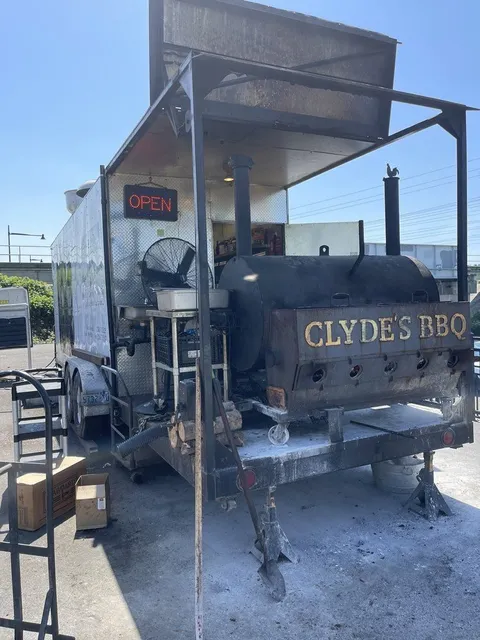
That system is on business security, with the cabling, AV and lighting on the commercial hub. Clyde's Southern Wood Fired BBQ in Tacoma shows what AI cameras placed on the real risk areas did to a run of theft losses. The fixed solar security tower stays on a lot or a farm that never gets a building.
Where do we work?
Trailers are leased and delivered across Washington from 415 Railroad Ave S, Kent, WA 98032, about 30 minutes from most South Sound sites. That covers Kent, Renton, Tukwila, Federal Way, Auburn, Covington, Maple Valley, Tacoma, Puyallup, Sumner, Bonney Lake, Tehaleh, University Place and Gig Harbor. The Olympic Peninsula and sites farther afield are by appointment and quote.
Rivas Group, LLC dba Rivas Technology Group holds WA electrical contractor license RIVASGL799DR, active, bonded and insured (L&I lookup). It is BBB accredited with an A+ rating and rated 5.0 from 49 Google reviews. It is an Ajax Systems dealer listed on ajax.systems for wireless intrusion protection, outdoor solutions and video surveillance. The team is on about us.
Questions about the surveillance trailer
How much does a solar surveillance trailer lease cost in Washington?
As of September 2026, the solar trailer is $2,195 a month on a three-month term or $2,595 month to month; the hybrid with a generator is $2,695. Professional monitoring adds $449 a month. Delivery, setup and pickup run $450 round trip inside 20 miles of Kent, on-site moves $250, event weeks $795. Cellular data is included.
Does Rivas Technology Group sell the trailer?
No. Rivas Technology Group leases the trailer from its own fleet and keeps the title. You get the trailer on your site for the term, with delivery, setup, moves and pickup handled by our team. The fixed solar security tower is the product we sell outright.
How tall is the mast and how many cameras does it carry?
Our units carry a 22 ft telescopic mast with three PTZ cameras as standard, each able to pan, tilt and zoom on a person or vehicle. Fixed, thermal or license-plate cameras go on instead when the site calls for them. A cellular router with our SIM is on board, and the data is part of the lease.
Will it run through a Kent winter?
Washington sees 6.37 peak sun hours a day in July and 1.32 in December7. Year-round trailers pair a larger array with a stated no-sun autonomy or a generator; one Washington operator sizes panels 20 percent larger and adds a generator16. Our unit's winter configuration is in the facts list on this page.
Do I need a permit?
Not on private property. Placement in the public right-of-way needs a city permit: Kent's Right-of-Way Permit13, Tacoma's RUSE or ROCC permit14 or Seattle's SDOT Street Use permit15. Rivas Technology Group handles the permit and prices it into delivery.
Should I lease a trailer or buy a tower for my site?
The tower is a ground unit: three cameras at eye level, meshed with other towers, for perimeters, gates, farms and lots that stay put a season or longer. The trailer puts cameras on a mast for a large open yard, an event, a work zone or a site that moves every few weeks. A walk-through settles it.
Can I lease a trailer and use towers on the same site?
Yes, and large sites often do: the trailer covers the open ground or the gate and the solar security towers mesh along the fence line. The tower is sold or leased; the trailer is leased. One site call sizes both, and both report to the same phone.
Is it monitored?
Alerts and live video go to your phone and to anyone you name, and event clips are kept for the length of your retention plan. If you want a central station in the loop, add professional monitoring month to month; our monitored systems report to Becklar, a UL-listed central station.
Get a trailer lease quote.
Tell us the site, how long the job runs, whether there is power on site and what leaves it at night. We walk the site, place the trailer where the mast sees the most, and send a monthly rate. We call or text back within one business day.