

Self-storage and RV storage security, Kent, Tacoma and the South Sound
Self-storage security
that answers at 2 a.m.
Cameras that cover the gate lane, the driveways, every row end and the RV lot. A plate on record for every car that comes through the gate. Live guards who talk to a trespasser before the lock is cut, on the lenses that matter.

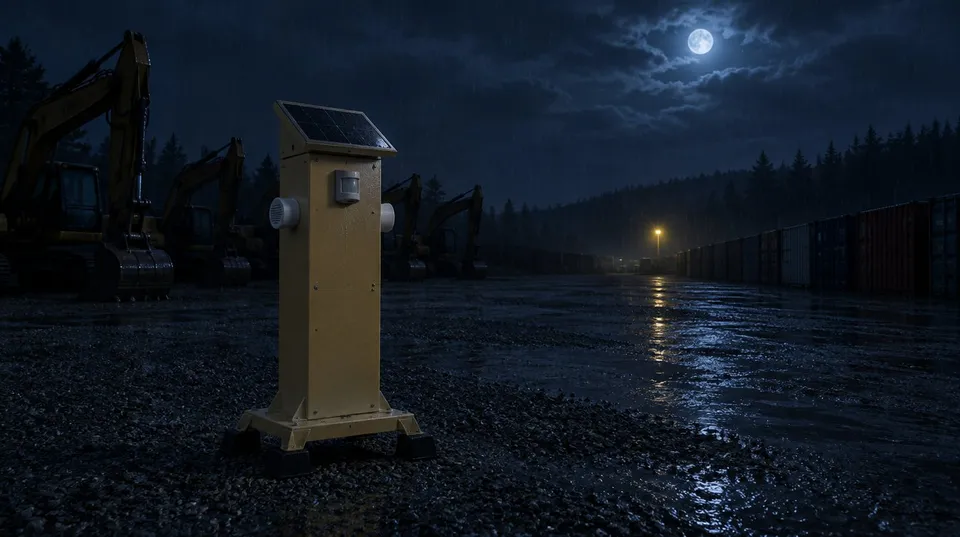

Rivas Technology Group secures self-storage and RV storage facilities in Kent, Tacoma and the South Sound. Cameras cover the gate lane, row ends and vehicle lot, a plate camera logs every car, and the office is alarmed. Live guard monitoring runs about $150 to $200 per lens per month as of September 2026.
- Cameras
- Gate lane, driveways, row ends, office, RV and boat lot, wired on PoE
- Plates
- A dedicated plate camera on the gate lane, lit for night capture
- Monitoring
- Live guards on the lenses you choose, about $150 to $200 per lens per month as of September 2026
- Gate
- Your keypad and management software stay; the cameras watch the lane
- Office
- Ajax intrusion with photo verification, monitored through Becklar, a UL-listed central station
- License
- WA electrical contractor RIVASGL799DR, bonded and insured
What goes wrong at a storage facility?
Break-ins at the unit, not at the office. Someone tailgates a tenant through the gate, or walks in over a back fence, and cuts locks down a row where no camera reaches. In a 2025 Inside Self Storage survey, 85 percent of owner-operators said they were worried about theft and break-ins1. In the same survey, 57 percent had dealt with repeated break-ins.
Most of those facilities already had cameras and a keypad: 92 percent used cameras and 71 percent used digital keypads. Yet 79 percent saw the same or more break-ins year over year. The equipment recorded the problem. Nothing on the property responded to it. The rest of this page is about closing that gap: cameras where the losses happen, a plate for every car, and a person who answers.
Which cameras does a storage facility need?
Cameras go where a thief has to pass or has to stop. That means the gate lane in both directions, every main driveway, and the end of every row, looking down the row. It also means the office door and counter, and the RV and boat lot, where one stolen trailer outweighs a year of unit claims. The back fence line matters too, because plenty of thieves never use the gate.
We wire the cameras on PoE back to a recorder in the office. Row ends are often far from the office, so the cable plan is drawn first: trenching, aerial runs between buildings, or a wireless bridge where neither works. Every camera is checked at night on the walk-through, because a view that works at noon can be black at 2 a.m. under one wall light. Details of the camera lines we install are on the security cameras page.
A plate for every car at the gate
A dedicated plate camera on the gate lane records the plate of every vehicle that enters or leaves. It is a different camera from the one that shows the scene: narrow, fixed on the spot where a car stops at the keypad, and lit for night. We record it to a Milesight NVR with plate management, so a plate can be searched instead of scrubbed for2.
The plate matters because of tailgating. A tenant's code opens the gate and a second car follows it in. The gate log shows one entry. The plate camera shows two cars, and a plate police can act on.
Keep your gate system, and watch it
Your gate keypad and management software stay where they are. They already hand out tenant codes, set access hours and lock out delinquent tenants. Ripping that out would cost you your tenant records and your staff's habits for no gain.
What we add is the video that makes the gate log useful. When a unit is hit, the log shows whose code opened the gate and when. The gate lane camera and the plate camera show who actually drove through at that minute. Washington's self-service storage law, RCW 19.150, sets when a delinquent tenant can be denied access and how a lien sale runs3. Your gate system enforces it. Our cameras record what happens at the gate while it does.
Live guard monitoring on the lenses that matter
Live guard monitoring puts a remote guard behind the cameras you choose, during the hours you choose. On-site analytics filter out rain, animals and headlights, so the guard sees people, not noise. When someone is in a row after hours, the guard talks to them through a speaker at the camera and sounds a siren. If they stay, the guard calls police and your contact list with a description of what they are watching. The full service is on the remote video monitoring page.
As of September 2026 it costs about $150 to $200 per lens per month, quoted per site. We recommend it on a handful of lenses, not every camera. Good candidates are the gate lane after close, the RV and boat lot, and the perimeter rows along the back fence. A camera by the office door that sees tenants all day is a poor candidate: the guard learns to ignore it, and so do you.
What happens without monitoring
Without live guard monitoring, the cameras record and your phone gets an alert. Nobody talks to anyone. If you are asleep when the alert comes in, the footage waits for you in the morning, next to a cut lock. Some owners choose that, and it is cheaper. It should be a choice made knowing the gap.
Talk-down needs a speaker at the camera. Some cameras have one built in, such as the Ajax Superior BulletCam HLVF4. Others get a small PoE speaker mounted beside them. Camera audio recording stays off by default; the speaker carries the guard's voice.
An alarm on the office
The office holds the cash drawer, the recorder, the gate controller and the tenant files, so it gets its own intrusion alarm. We install Ajax: contacts on the doors, motion inside, and MotionCam detectors that send a photo with the alarm. It is monitored month to month through Becklar, a UL-listed central station. Where the office cameras should back the alarm with a clip, the video verified monitoring page explains how that works.
Unit door alarms across a whole facility are a different product. They usually come from the gate system vendor, because they tie each door to the tenant's code. Rows of steel doors also block radio, which is why we keep wireless alarms to the office and a few high-value units. We aim cameras where the unit alarms report.
What drives the cost?
The proposal is itemized per camera and per monitored lens. What moves it: the number of buildings and rows, the length of the back fence line, whether there is a vehicle lot, and the cable path from each row end back to the office. Trenching across asphalt costs more than an aerial run between buildings. The recorder is sized for how many days of video you want to keep, and the internet upload has to carry the monitored lenses. Monitoring is a monthly line, per lens, on the same proposal.
Where we work
We install from 415 Railroad Ave S in Kent and cover south King County and Pierce County: Kent, Renton, Tukwila, Federal Way, Auburn, Covington, Maple Valley, Tacoma, Puyallup, Sumner, Bonney Lake and Gig Harbor. Rivas Technology Group holds WA electrical contractor license RIVASGL799DR, active, bonded and insured5, and is an Ajax Systems dealer listed on ajax.systems. The rest of the commercial platform is on business security.
Questions we hear
What security does a self-storage facility need?
Five layers. A fence and a gate that logs every code. Cameras on the gate lane, driveways, row ends and vehicle lot. A plate camera at the gate. An alarm on the office. And someone who responds after hours, whether that is you on your phone or a live guard.
Don't cameras already stop break-ins?
Not on their own. In a 2025 Inside Self Storage survey, 92 percent of owner-operators used cameras, yet 79 percent saw the same or more break-ins year over year6. A camera records. Deterrence comes from a response while the person is still on the property.
What is live guard monitoring?
A remote guard watches camera events on the lenses you choose, during the hours you choose. When a person shows up where nobody should be, the guard talks to them through a speaker at the camera, sounds a siren, and calls police and your contact list if they stay.
How is that different from video verified alarm monitoring?
Video verification starts with an alarm. A detector trips, a clip goes to the central station, and the operator dispatches on what they see. Live guard monitoring starts with the camera and can act before anything is broken. Most facilities use cameras outside and an alarm inside the office.
How much does live guard monitoring cost?
About $150 to $200 per lens per month as of September 2026, quoted per site. The price depends on the monitored hours and the number of lenses. We recommend it on a handful of lenses, such as the gate lane, the vehicle lot and the perimeter rows, rather than every camera.
Can you work with my gate keypad and management software?
Yes. We keep the gate system you already run, with its tenant codes and delinquency lockouts. We add a camera on the gate lane and a plate camera beside it. When a unit is hit, the gate log says whose code opened the gate and the video shows who came through.
Can you reuse the cameras I already have?
Often, if they are wired network cameras that support ONVIF, the common standard most brands use. We check each model on the walk-through. Analog cameras, consumer Wi-Fi cameras and anything that cannot see a plate at night usually get replaced on the lenses that matter.
Do you put alarms on individual units?
Not across a whole facility. Unit door alarms normally come from the gate system vendor, because they tie into the tenant's code. Rows of steel doors also block radio. We alarm the office, the back of house and any unit that needs it, and aim cameras where the unit alarms report.
Does anyone watch the cameras if I skip monitoring?
No. Without monitoring, the cameras record and your phone gets an alert. If nobody picks up at 2 a.m., nothing else happens until you review the footage in the morning. That gap is the whole reason live guard monitoring exists.
Start with a facility walk-through.
Tell us the address, the number of buildings and rows, and whether you store vehicles. We walk the site at dusk, mark every camera and cable path, and send a proposal with the monitoring priced per lens. We call or text back within one business day.