

Remote video monitoring and live guards, Kent, Tacoma and the South Sound
Remote video monitoring:
someone answers the camera.
A remote guard behind the cameras you choose, during the hours you choose. When someone walks onto the lot after close, the guard talks to them through a speaker at the camera. If they stay, the guard calls the police with a description of what is happening.


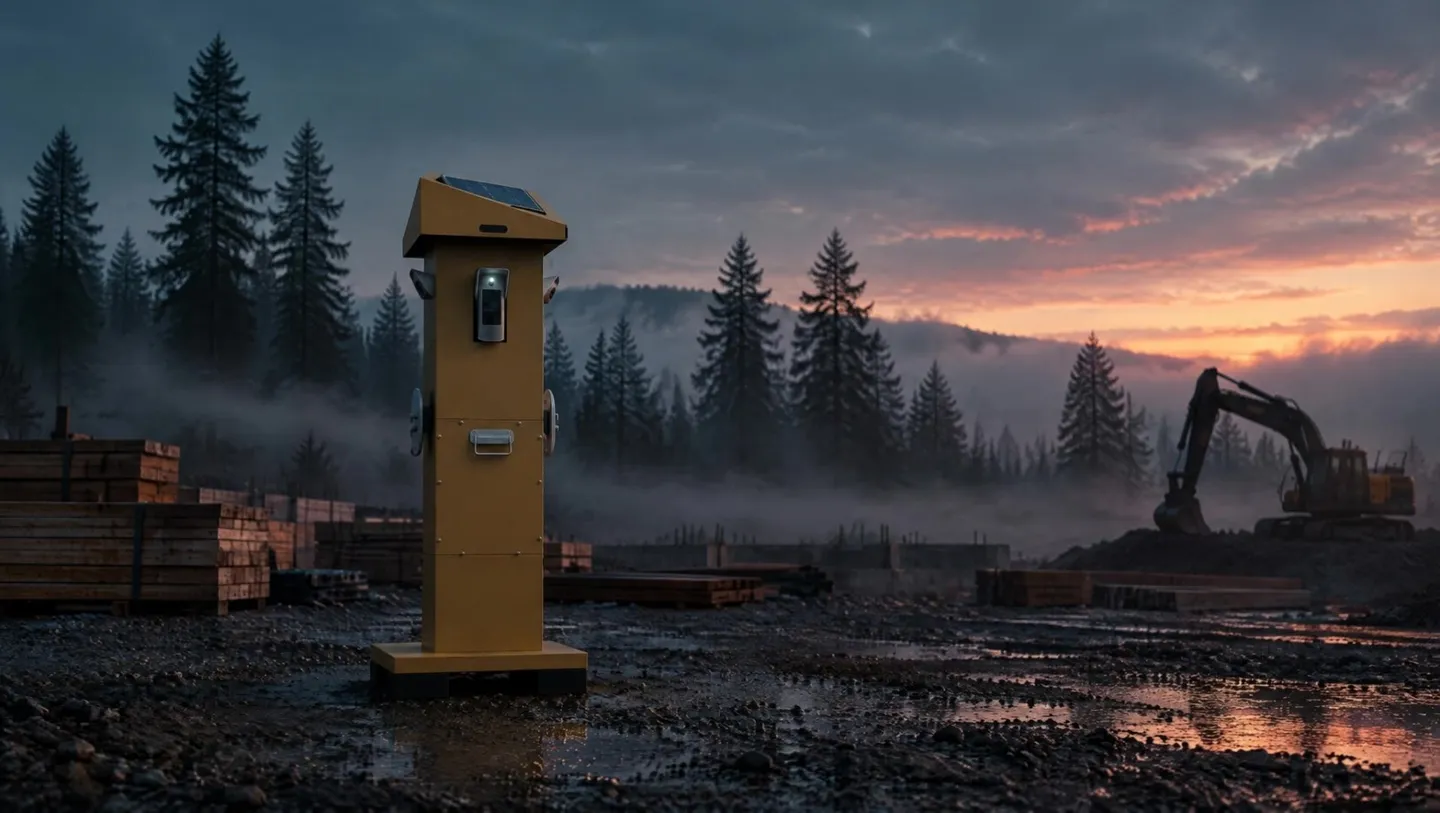
Remote video monitoring puts a live guard behind your cameras after hours. The guard watches live, talks through a speaker at the camera, sounds a siren, and calls police if the person stays. Rivas Technology Group installs it in Kent, Tacoma and the South Sound, at about $150 to $200 per lens per month as of September 2026.
- What it is
- Live guards behind chosen cameras during chosen hours, with talk-down, siren and a police call
- Price
- About $150 to $200 per lens per month as of September 2026, quoted per site
- Lenses
- A handful per site: gate, lot, perimeter rows, yard; never every camera
- Cameras
- Ours, or your wired ONVIF cameras where they pass the walk-through
- Talk-down
- A speaker at every monitored camera, built in or mounted beside it
- License
- WA electrical contractor RIVASGL799DR, bonded and insured
What is remote video monitoring?
A remote guard behind your cameras, during the hours your site is empty. Analytics on site watch each monitored camera and filter out rain, animals and headlights. When a person appears where nobody should be, the live view goes to a guard. The guard decides what is happening and acts while the person is still there.
Cameras on their own record what happened. Remote video monitoring is for the minutes while it is happening.
What happens when someone shows up?
Four steps:
- Detection. Analytics on the monitored camera flag a person or a vehicle in a watched zone during watched hours.
- A guard looks. The live view goes to a guard, who decides whether it is a trespasser, a tenant or a worker who stayed late.
- Talk-down. The guard speaks to the person through a speaker at the camera and can sound a siren.
- The call. If the person stays, the guard calls police and your contact list with a description of what they are watching.
The police decision belongs to the agency, and nobody can promise a response time. What the guard gives them is a crime in progress described by a person watching it. Since 1 October 2024, Seattle Police have required evidence of a crime in progress before responding to alarm calls, and a sensor on its own does not qualify1.
How is it different from video verified alarm monitoring?
They start in different places, and many sites use both.
| Remote video monitoring | Video verified alarm monitoring | |
|---|---|---|
| Starts with | A camera sees a person | A detector trips an alarm |
| Who looks | A remote guard, live | A central station operator, at a clip |
| What they do | Talk down, siren, call police and you | Review the clip and dispatch on it |
| Best for | Lots, yards, rows and perimeters after close | Restricted rooms inside an alarmed building |
| Price as of September 2026 | About $150 to $200 per lens per month | About $125 to $150 per lens per month |
Outside, guards watch the lot. Inside, the office or the stock room has an Ajax alarm, and the cameras there back each alarm with a clip. How the inside half works is on the video verified monitoring page.
Which cameras should be monitored?
A handful, chosen for one rule: nobody should be there after close. The gate lane once the gate is shut, the vehicle lot, the back rows along the fence and the equipment yard all pass that test. Each event on those lenses means something, so the guard acts on it.
A camera over the front door or the customer lot fails the test. It sees legitimate people all evening, the guard learns to ignore it, and you pay a monthly fee for noise. Most sites monitor a handful of lenses out of a larger camera count. The walk-through picks them.
Every monitored camera needs a speaker for talk-down. Some cameras have one built in, such as the Ajax Superior BulletCam HLVF2. Others get a small PoE speaker mounted beside them. Camera audio recording stays off by default; the speaker carries the guard's voice.
Can it use the cameras I already have?
Often. Wired network cameras that support ONVIF, the common standard most brands use, can usually be monitored. We check each model on the walk-through against the night view it needs and the speaker it lacks.
Analog cameras, consumer Wi-Fi cameras and any camera that shows a black frame at night on the lens that matters get replaced. New cameras are installed on PoE and recorded on site, as on the security cameras page. The site's internet upload has to carry the monitored lenses, which the walk-through also checks.
What does it cost?
About $150 to $200 per lens per month as of September 2026, quoted per site. Two things move it: the number of monitored lenses and the monitored hours. A site watched from close to open every night costs more than one watched on weekends only.
The cameras, speakers, cabling and any network work are a one-time install on the same proposal. The proposal also states in writing what is watched, when, what the guard does and what counts as an event.
What happens without it?
The cameras record and your phone gets an alert. Nobody talks to anyone. If the alert comes in at 2 a.m. and you are asleep, the footage waits for you in the morning. Some owners choose that, and it is cheaper. It should be a choice made knowing the gap.
Where does it fit?
Sites that are empty after close and worth stealing from. Self-storage and car dealerships have their own pages. Construction sites and equipment yards are the classic case. Apartment parking lots fit, covered on the multifamily page. Cannabis perimeters fit too, alongside the recording the state requires on the cannabis security page.
A site with no power and no internet cannot stream live video to a guard. It starts with the solar alarm tower: an Ajax alarm with photo verification that runs on its own panel and cellular.
Where we work
We install from 415 Railroad Ave S in Kent and cover south King County and Pierce County: Kent, Renton, Tukwila, Federal Way, Auburn, Covington, Maple Valley, Tacoma, Puyallup, Sumner, Bonney Lake and Gig Harbor. Seattle sites carry the travel terms on the pricing page. Rivas Technology Group holds WA electrical contractor license RIVASGL799DR, active, bonded and insured3, and is an Ajax Systems dealer listed on ajax.systems. The rest of the commercial platform is on business security.
Questions we hear
What is remote video monitoring?
A remote guard watching your cameras during set hours, usually close to open. Analytics on site flag a person where nobody should be, and the guard looks at the live view. Then the guard acts: a spoken warning through a speaker at the camera, a siren, then a call to police and your contact list.
How is it different from video verified alarm monitoring?
It starts with the camera, not the alarm. Video verification waits for a detector to trip, then sends a clip to a central station operator. Remote video monitoring watches live and can act before a door is forced. Many sites use both: guards outside, a verified alarm inside.
How much does remote video monitoring cost?
About $150 to $200 per lens per month as of September 2026, quoted per site. The monitored hours and the number of lenses move it. We recommend a handful of lenses on the places nobody should be after close, not every camera on the property.
Will the police come when the guard calls?
The decision belongs to the agency, and nobody can promise a response time. What a guard can give them is a person watching a crime in progress, with a description. In Seattle that matters: since 1 October 2024 police respond to alarm calls only with evidence of a crime in progress.
Can you monitor the cameras I already have?
Often, if they are wired network cameras that support ONVIF, the common standard most brands use. Each model is checked on the walk-through. A monitored camera also needs a speaker for talk-down and a view that works at night, so some lenses get replaced or added.
What sites is it for?
Places that are empty after close and worth stealing from: construction sites and equipment yards, car lots, self-storage, apartment parking, cannabis perimeters and warehouses with an outdoor yard. A site with no power or internet at all starts with the solar alarm tower instead.
Does anyone watch if I skip monitoring?
No. The cameras record and your phone gets an alert. If nobody answers at 2 a.m., nothing else happens until you review the footage in the morning. That gap is the reason remote video monitoring exists.
Is there a long contract?
The term is set in the proposal for your site, and the monitoring is a monthly line on it, per lens. We state what is watched, when, what the guard does and what counts as an event, in writing, before anything is installed.
Start with a site walk-through.
Tell us the address, what gets stolen or damaged, and the hours the site is empty. We walk it after dark, mark the lenses worth monitoring and the speakers they need, and send a proposal priced per lens. We call or text back within one business day.