Network
The FAA outage, and the copper phone lines going away near you.
On November 13 a routine job switching old copper wires to fiber ended in a nationwide ground stop, and Sea-Tac canceled 130 flights the next day. The same move is happening to the copper phone lines in homes and businesses. Here is what is changing, what still quietly depends on a copper line, and how to switch without a gap.
POTS lines, the plain old copper telephone lines, are being retired by the phone companies. AT&T plans to leave copper in most of its footprint by the end of 2029, and Lumen, the CenturyLink company that serves much of Washington, has stopped taking new orders for them. Before your line goes, list everything that dials out on it (alarm panel, fire panel, elevator phone, gate call box, fax, card terminal, medical alert) and give each one a tested replacement path, with battery backup.
By Ivan Rivas, Owner and Sales Engineer · 2026-11-24 · Updated 2026-11-24

What happened to the FAA
On Friday, November 13, the FAA stopped flights nationwide for about four and a half hours. Transportation Secretary Sean Duffy said a contractor doing routine maintenance to switch old copper wires to fiber at a remote FAA site installed a router that overloaded the system (The Seattle Times). Sea-Tac felt it for days: by noon the next day, 130 Saturday flights there had been canceled and 170 delayed, according to FlightAware (The Chronicle). Duffy said nearly 70% of the FAA's copper communication lines have already been replaced with fiber.
Two lessons carry over to your building. Copper is on its way out. And the risky moment is the switchover itself.
Your copper phone line is being retired too
The phone companies are making the same move, and in March 2026 the FCC adopted rules to make it faster (FCC 26-19, FCC).
- AT&T says it will "exit our copper network in the majority of our footprint by the end of 2029" (AT&T).
- Lumen, the CenturyLink company behind most Washington landlines, stopped accepting new and changed POTS orders across its legacy territory on May 1, 2025, according to BCN Telecom's carrier tracker. Full retirement filings for Washington are expected between 2026 and 2029; no wire center dates are posted yet (BCN Telecom).
- Notice: the FCC's guide lists at least 90 days' notice of a copper retirement for residential customers and 180 days for business customers (FCC). Before a carrier stops the voice service itself, it must make sure an adequate replacement is available (FCC).
Ninety days is not long when a fire panel, an elevator and a gate are on the line.
What still runs on your copper line
Most people think of the phone. The line usually carries more than that, and a lot of it dials out on its own:
| On the line | What happens when copper goes | The usual replacement |
|---|---|---|
| Burglar alarm panel | Stops reporting to the monitoring center | Cellular or IP communicator, or a hub with both built in |
| Fire alarm panel | Loses its path to the central station | A listed cellular or IP communicator, accepted by the fire marshal |
| Elevator emergency phone | The car's phone goes dead | An elevator phone or adapter approved for the installation |
| Gate or door call box | Visitors cannot call in | An IP intercom that rings phones and an app |
| Fax, card terminal | Stops connecting | Internet fax; an Ethernet, Wi-Fi or cellular terminal |
| Medical alert base | Cannot call for help | A cellular or internet base station |
Some of these will run on a VoIP adapter and some will not. Older alarm dialers in particular often fail on one. Test each device on its new path before the copper is gone, not after.
How to switch without a gap
- Inventory every line. Walk the building with the phone bill: every number, where it terminates, what is plugged in.
- Mark the life safety lines. Fire alarm and elevator lines have code rules. Their replacement has to be listed for the use and accepted by the authority having jurisdiction.
- Give each device a path that fits it. Alarms to a cellular or IP communicator, gates to an IP intercom, phones to VoIP.
- Add a second path and battery backup. The FAA outage is the reminder: a single new path is a single new point of failure. The federal rule requiring home voice providers to offer backup power options expired on September 1, 2025 (47 CFR 9.20), so plan your own.
- Test, then cancel. Prove each device reports on its new path. Cancel the copper line last.
What we do about it
Rivas Technology Group handles the parts that are ours and coordinates the rest:
- Alarms. An Ajax Hub 2 Plus reports over Ethernet, Wi-Fi and cellular, and runs up to 15 hours on its battery, so it needs no phone line at all.
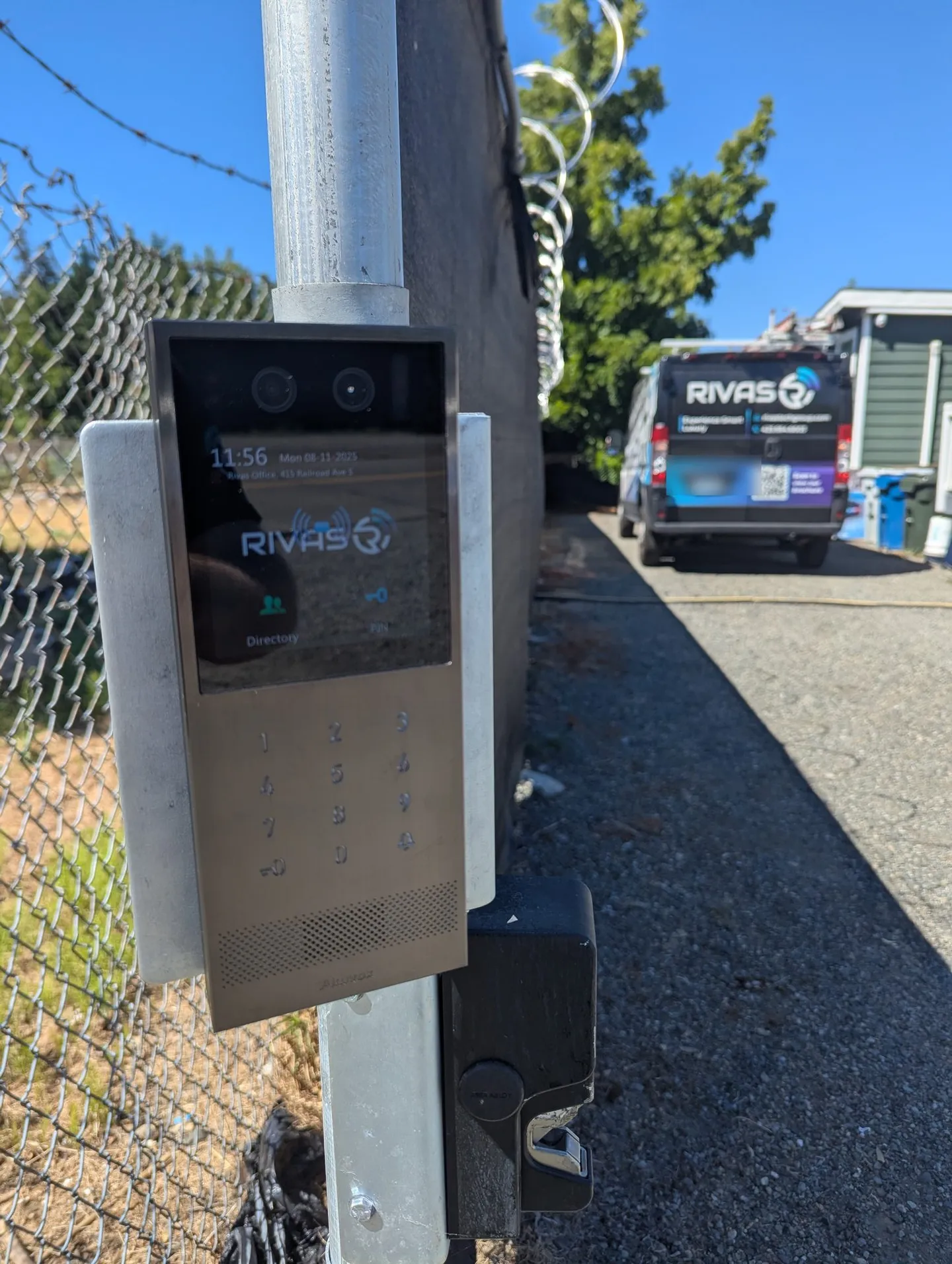
- Gates and doors. We replaced a failing Sentex call box that ran on a landline with an Akuvox intercom that rings phones and opens from an app, on this Mercer Island gate. See Akuvox intercoms.
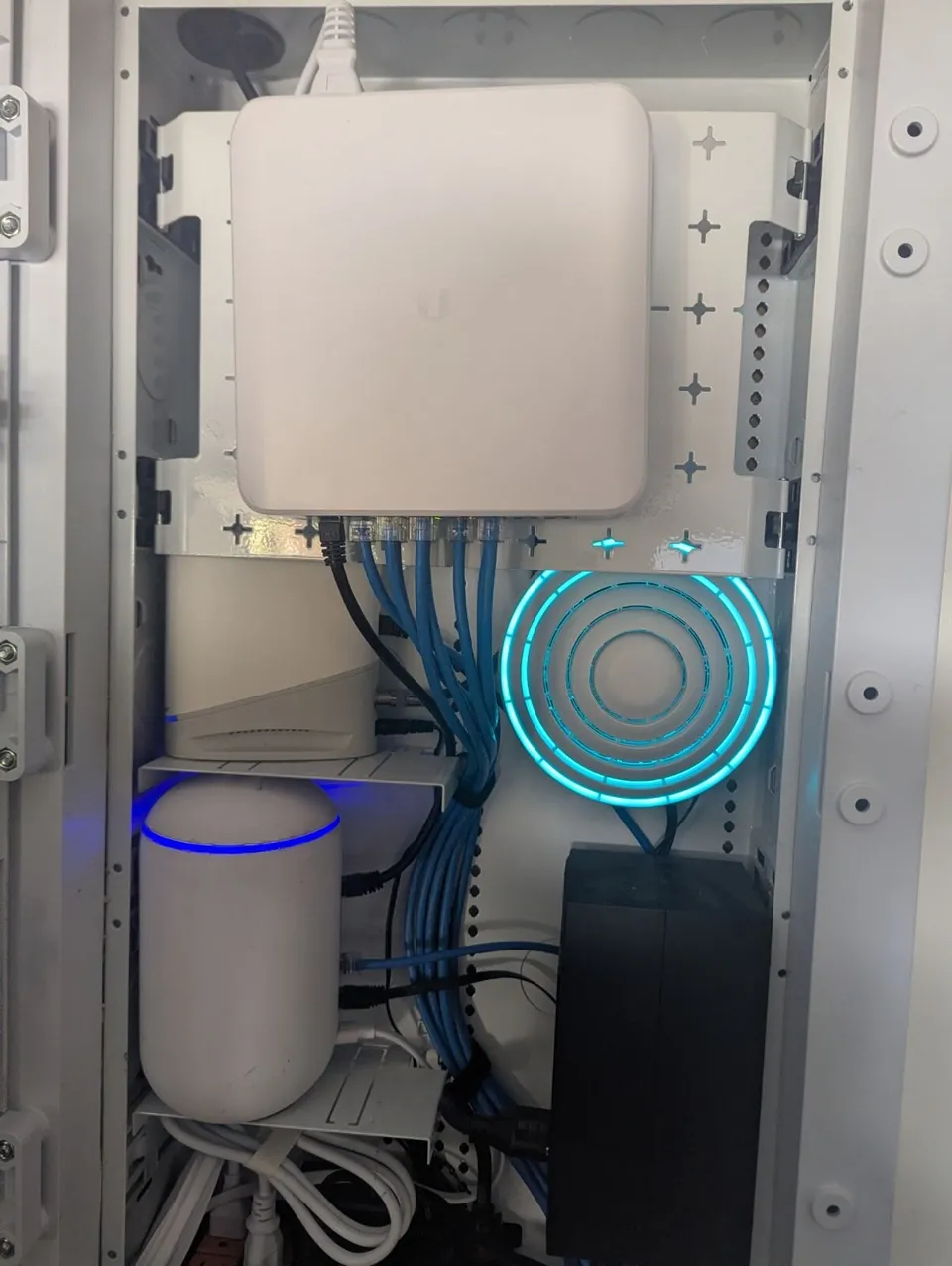
- The network the new paths ride on, with battery backup in the rack, like the one in the photo above. See commercial infrastructure.
- Fire alarm and elevator lines: we inventory them and work with your fire alarm and elevator companies, who are licensed for those systems.
Building new? Skip copper for data entirely: fiber to the jack runs one fiber strand to each room, with copper only where a device needs power over Ethernet.
Not sure what is on your lines? Start with the free copper line check below.