
Project: multi-gig home network and AV
A Tacoma home near Ruston,
2 gig fiber carried to every access point
The owners were paying for 2 gig Lumen fiber and getting weak Wi-Fi in most of the house. They also wanted a smart home, eventually. We started where everything else depends: a wired, multi-gig network from the router to the ceiling, with Cat6 through the attic, a clean ceiling raceway where the attic could not reach, and three Wi-Fi 7 access points. The AV upgrade added a Control4 Halo Touch remote, which sets the house up for automation later without redoing anything.


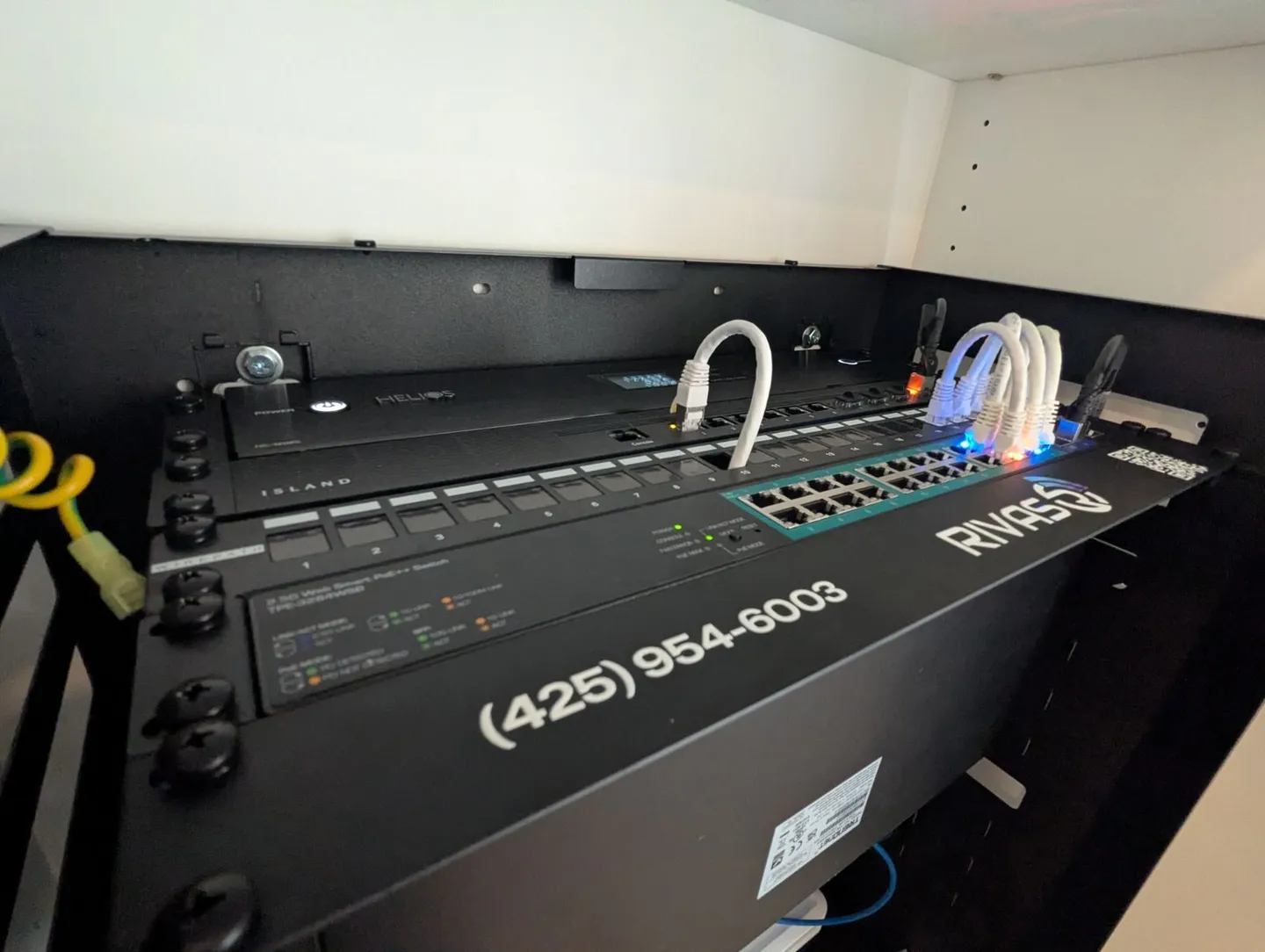
Rivas Technology Group rebuilt the home network of a Tacoma home near Ruston on 2 gig Lumen fiber. An Island Router Pro, a TRENDnet 24-port 2.5G PoE++ switch and three Ruckus R370 Wi-Fi 7 access points, each on its own Cat6 run, carry multi-gig speeds from the fiber to every access point. The AV upgrade added a Control4 Halo Touch remote as the first step toward whole-home automation.
- Client
- Private home
- City
- Tacoma, WA, near Ruston
- Before
- 2 gig Lumen fiber, and weak Wi-Fi through most of the house from the provider's equipment on a shelf
- Network
- Island Router Pro, TRENDnet TPE-3284WSB 2.5G PoE++ switch, three Ruckus R370 Wi-Fi 7 access points, Cat6 to each
- AV
- Control4 Halo Touch remote, the start of a Control4 system
- Result
- Multi-gig from the fiber to every access point, in a locked wall rack
What was the problem?
Fast internet, slow house. The home had 2 gig Lumen fiber, and the provider's equipment sat on a bookshelf in one room, doing all the work alone. Close to it the speed was fine. Down the hall, upstairs and in the far rooms the Wi-Fi was weak or gone. The owners had called about the internet, and in the same conversation said they were interested in a smart home. That set the order of the work: the network first, because every smart device that comes later depends on it.
What did we design?
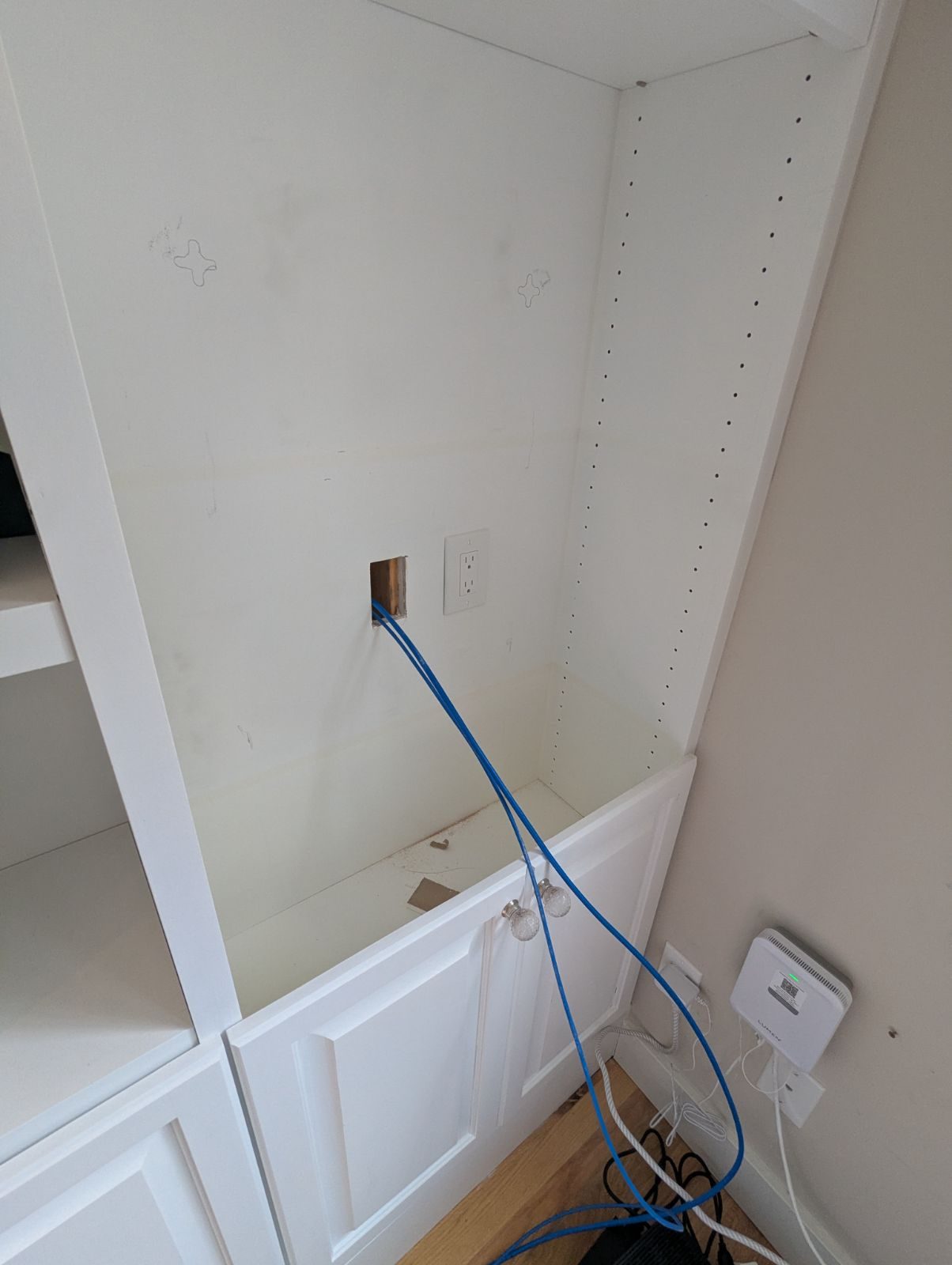
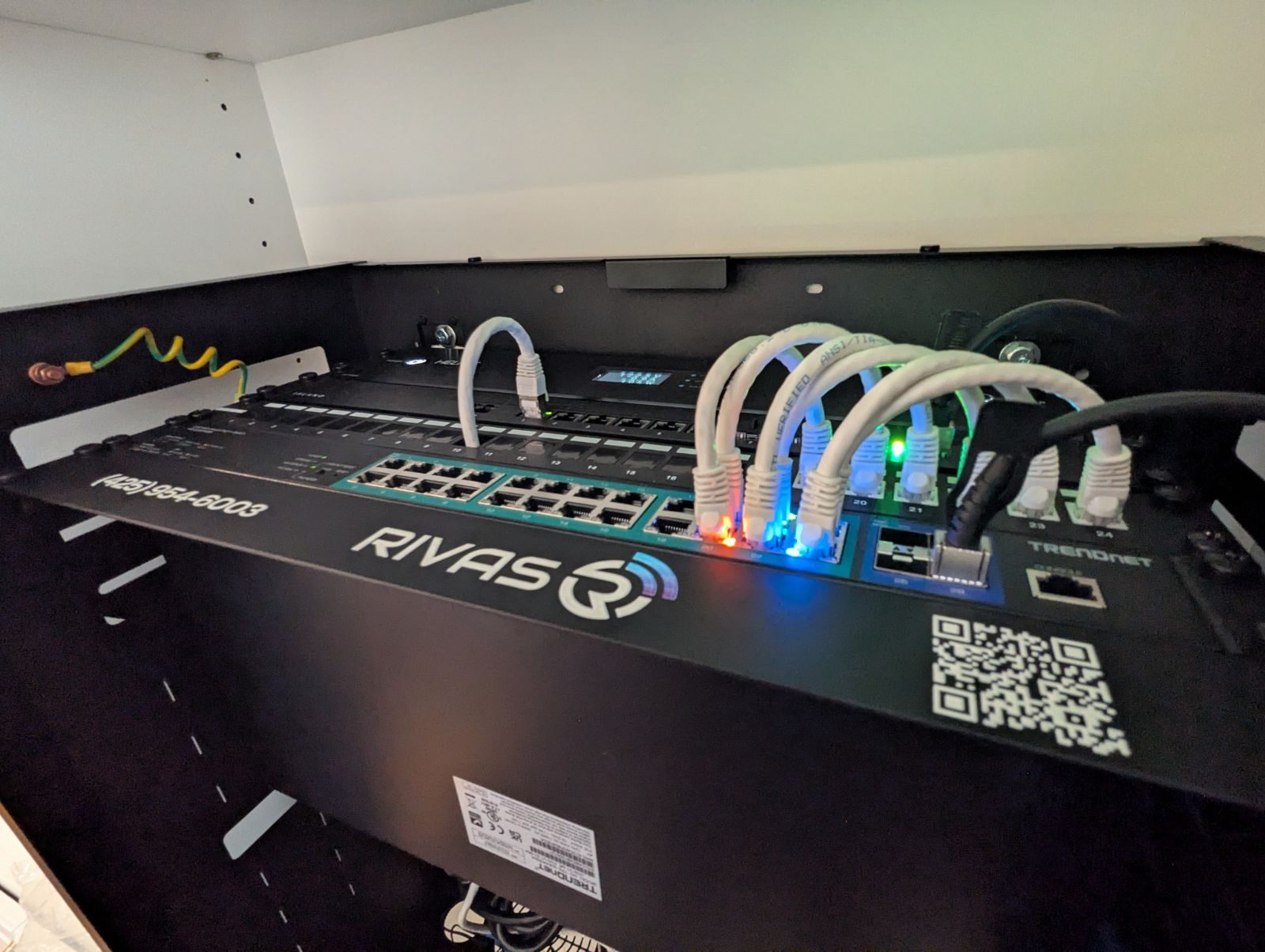
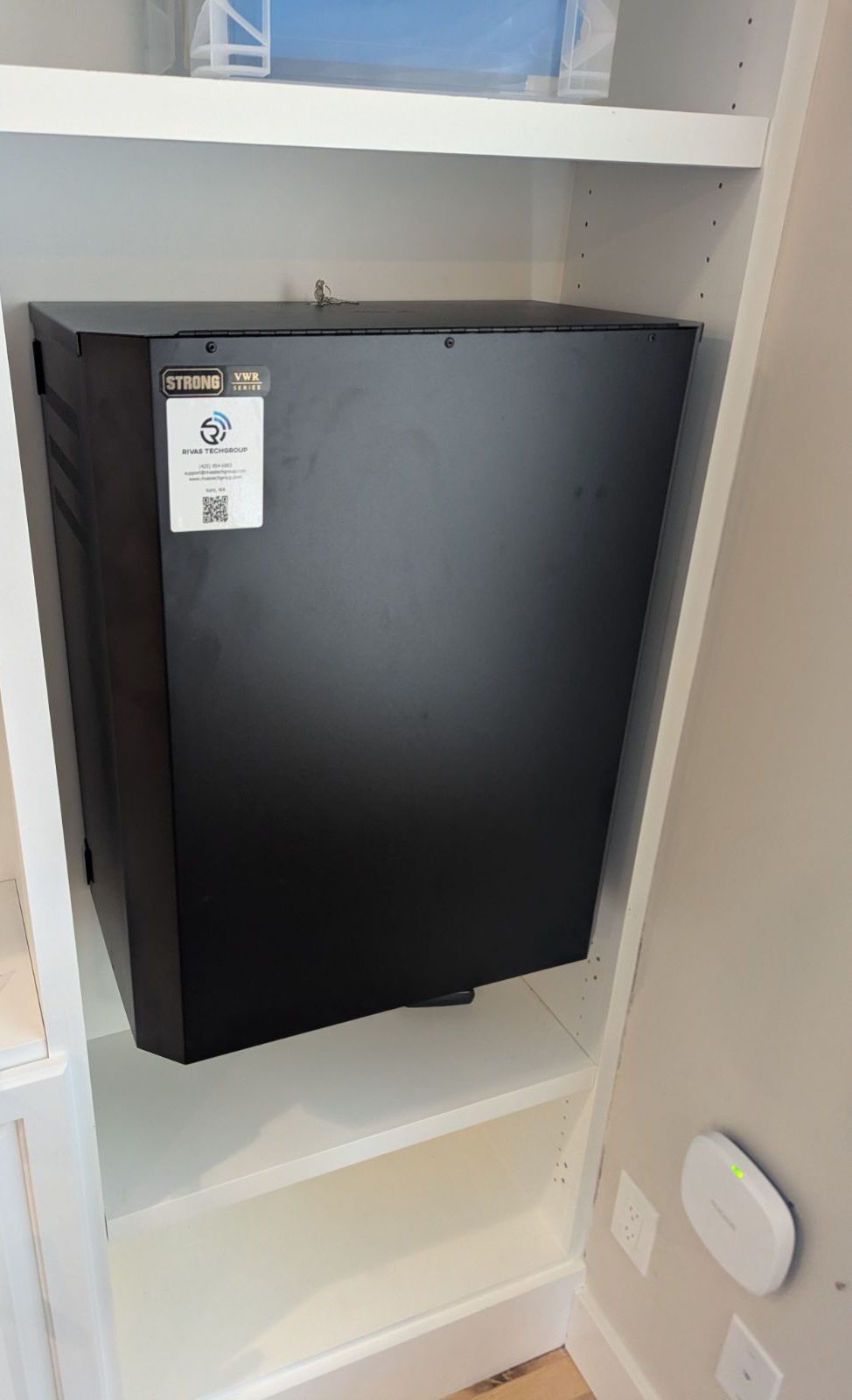
A wired network, multi-gig at every hop. The router, the switch and the access points were chosen so that no link in the chain is slower than the fiber feeding it: 2.5 gigabit copper to each access point and room to grow on 10 gigabit ports. Three access point locations were picked from a walk of the house, each on its own Cat6 run back to a single switch in a locked wall rack. The rack went into the built-in shelving where the provider's equipment already lived, so the fiber did not move.
What did we install?
- Router: an Island Router Pro, with four 10 Gbps SFP+ ports and six 2.5 Gbps ports1. It is subscription-free, and the Island Router page explains why we install it.
- Switch: a TRENDnet TPE-3284WSB, 24 ports of 2.5G PoE++ with two 10G SFP+ uplinks2, powering every access point over its own cable.
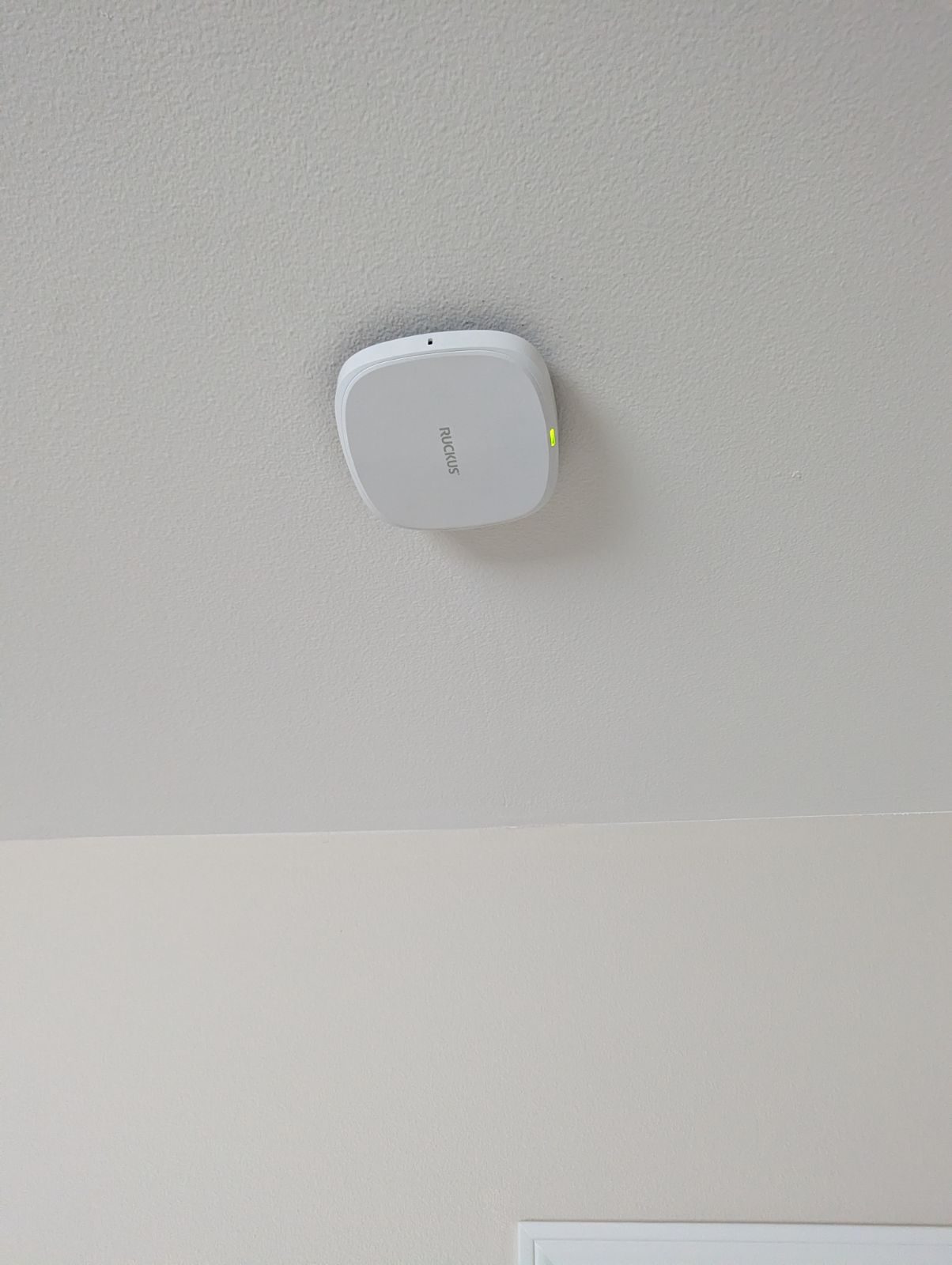
- Wi-Fi: three Ruckus R370 access points, Wi-Fi 7 (802.11be) on 2.4 and 5 GHz, each with a 2.5 GbE port3, mounted on the ceilings.
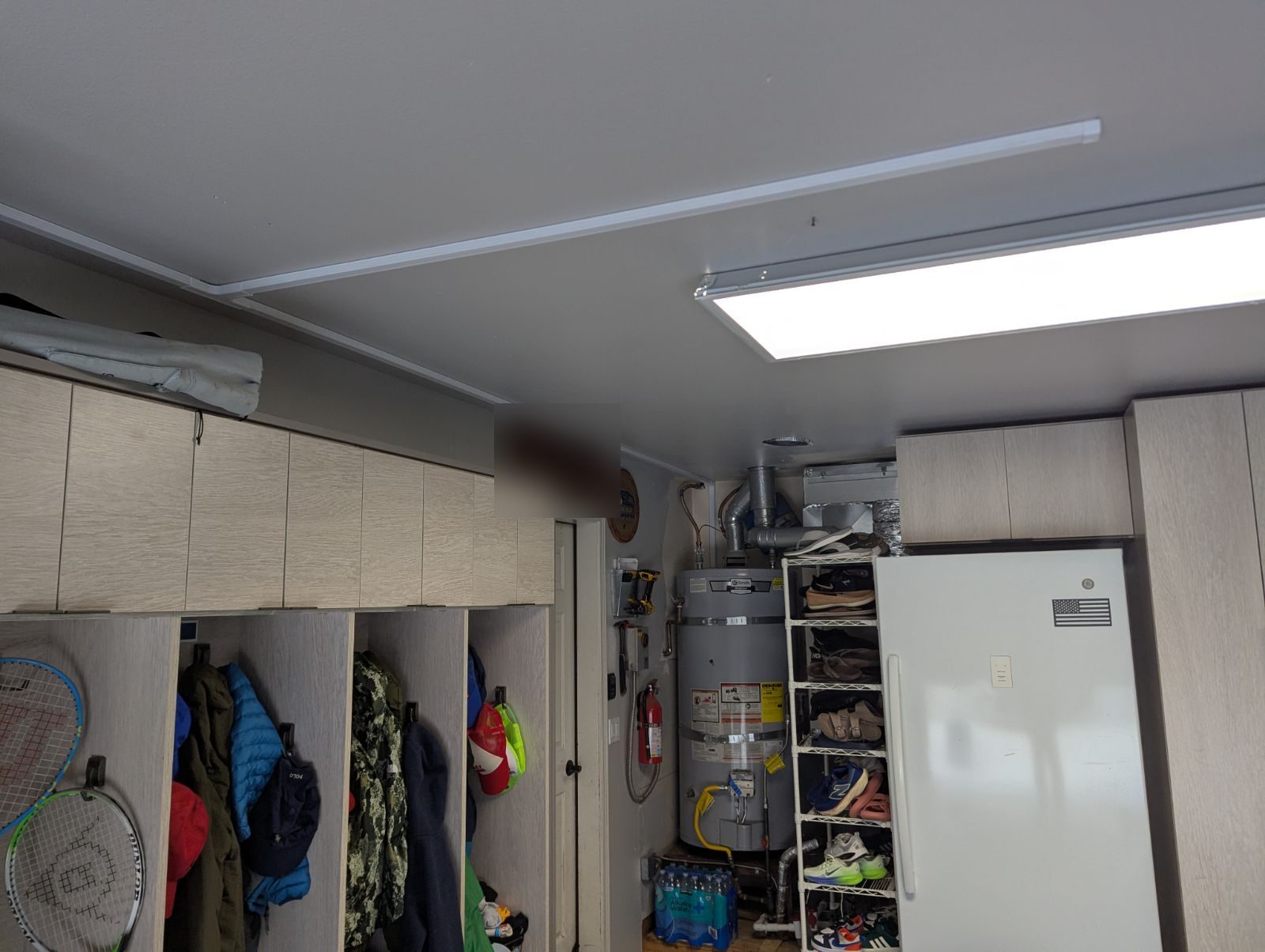
- Cabling: Cat6 pulled through the attic to each access point, and a white ceiling raceway on the runs the attic could not reach.
- Rack: a locked Strong VWR wall rack inside the built-in, grounded and patched with short runs.
- AV: a Control4 Halo Touch remote, with a 3.2-inch touchscreen and voice control4, as the first piece of a Control4 system.
What changed?
The house gets the speed the owners pay for. Multi-gig links carry the 2 gig fiber from the router to each access point, and three ceiling access points replace one box on a shelf. The network now lives in a locked rack that closes into the built-in. And the Control4 remote is in their hands, so lighting, shades or climate can be added later on the same network without redoing it.
Where is this project?
Tacoma, WA, near Ruston and Point Ruston, 30 to 35 minutes from our office at 415 Railroad Ave S in Kent by SR-167 and I-5. We work across Tacoma, from the North End and Ruston to the Stadium District and the waterfront, and the city's homes are covered on the Tacoma smart home page.
What drives the cost of a project like this?
The number of access points, the cable paths and the hardware tier. Attic access makes cabling quick; finished ceilings with no attic above need raceway or more labor. A 1 gig service can use a simpler switch; a 2 gig or faster service needs multi-gig at every hop, as here. Everything ends in a fixed proposal after a walk of the house, and the networking page explains the options.
Similar project?
If you pay for fiber and the Wi-Fi does not match, the fix is usually the same: wired access points, each on its own cable, on a switch that keeps up with the service. If a smart home is the next step, the network is the first one either way. Ongoing care for the network and the Control4 system is available through CURATOR.
Why Rivas Technology Group
WA electrical contractor license RIVASGL799DR, active, bonded and insured5. Control4 Authorized Dealer, listed on Control4's integrator map. Ruckus, Alta Labs and Ubiquiti UniFi are the access points we install, on wired networks we design and document.
Questions we hear
Why didn't faster internet fix the Wi-Fi?
Because the bottleneck was inside the house. Fiber delivers the speed to one box; from there, one wireless router has to push it through walls and floors, and every room it cannot reach well gets a fraction of it. Wiring an access point into each area, each on its own cable back to a switch, is what brings the paid-for speed to the rooms.
What does multi-gig mean here?
Every link in the path runs faster than 1 gigabit. The Island Router Pro has six 2.5 Gbps and four 10 Gbps SFP+ ports1, the TRENDnet switch has 24 2.5G PoE++ ports and two 10G SFP+ uplinks2, and each Ruckus R370 has a 2.5 GbE port3. A 1 gig link anywhere in the chain would cap a 2 gig service at 1 gig.
Why Ruckus R370 access points?
They are Wi-Fi 7 (802.11be) on 2.4 and 5 GHz with a 2.5 GbE uplink3, so the wired side keeps up with the radio side. Three of them, placed from a walk of the house, covered it with room to add one later on the same switch.
What if there is no attic path to a room?
We use a white surface raceway, run along the ceiling line so it reads as trim. In this house the attic reached most of the access point locations; the rest got a raceway, kept straight and tight to the ceiling.
What is the Control4 Halo Touch?
A Control4 handheld remote with a 3.2-inch color touchscreen, backlit buttons and voice control4. Today it runs the TV and AV. When the owners add lighting, shades or climate, the same remote controls them, which is why we started there. More on the Control4 page.
Paying for fiber and not getting it? Start with a walk-through.
Tell us the address, your internet plan and where the Wi-Fi drops. We walk the house with you and send a fixed proposal. We call or text back within one business day.