Business
How much does a video wall cost in Tacoma and the South Sound?
It depends, and this guide tells you on what. Five drivers set the installed price of a commercial video wall, and three costs get left out of most quotes. A site assessment turns all of it into one fixed number.
The installed cost of a commercial video wall in Tacoma is set by five drivers: LCD or direct-view LED, pixel pitch, size, brightness and mounting. Add the processor, power, network and control that most quotes leave out. Rivas Technology Group turns all of it into one fixed number after a site assessment.
By Ivan Rivas, Owner and Sales Engineer · 2026-07-22 · Updated 2026-09-17

Why does every video wall quote say "it depends"?
Because a video wall is a system, not a product. It is built from panels or LED modules, a processor, mounting engineered to your structure, power, network and control, assembled to a specific room, viewing distance and content plan. Two walls that look identical in a photo can differ in cost by three times and both prices can be fair.
Rivas Technology Group does not publish a price list for the same reason, but the drivers below explain nearly all of the spread. Once you know them you can read any quote and see what you are paying for. For a figure, the instant quote gives a starting number and a site assessment gives a fixed one.
Driver 1: LCD panels or direct-view LED
This is decision one, and it moves the price more than anything else. LCD video walls tile commercial narrow-bezel panels in a grid: the cost-effective workhorse for lobbies, conference rooms, dashboards, menus and monitoring. Direct-view LED is a single gap-free canvas built from LED modules, sized to the space, and it typically costs several times an equivalent LCD wall. Neither is better; they solve different problems.
Driver 2: pixel pitch, matched to viewing distance
On LED walls, pixel pitch is the spacing between LEDs, and finer pitch means far more LEDs and far more cost. Over-specifying pitch for the real viewing distance is the most common source of wasted spend. If the closest viewer stands fifteen feet away, a very fine pitch delivers no visible benefit over a coarser, far cheaper one. We spec pitch to where people will stand, not to the brochure.
Driver 3: size and configuration
Cost scales with area, and not linearly. A 3x3 wall is not a little more than a 2x2; it is more than double the displays plus a more capable processor, heavier mounting and more labor. Size also drives the supporting work: power, signal distribution and sometimes structure.
Driver 4: brightness and environment
A wall facing a bank of windows needs far more brightness than one in a controlled boardroom, and brightness costs money. Outdoor walls add sealed weatherproof cabinets and many times the brightness of indoor panels, which is why an exterior installation carries a large premium per square foot.
Driver 5: installation complexity
A flat mount on solid structure is the baseline. Recessed installs, curved arrays, overhead rigging, tight service clearances and after-hours work in an operating restaurant or store all add labor. Serviceable mounting that lets a single panel be pulled forward costs more on day one and saves money every time a panel needs attention; we specify it.
What do most quotes leave out?
Three line items that surprise buyers who started from a hardware-only number:
- Dedicated electrical. Large LED walls draw serious power at full brightness, and most commercial spaces need dedicated circuits before the wall can run. This is licensed electrical work; we hold WA electrical contractor license RIVASGL799DR, so it is in our scope, not someone else's.
- Network infrastructure. Video walls connect to a network for content management and remote monitoring. If the space lacks proper cabling and switching, that gets built first; see commercial infrastructure.
- Structural reinforcement. A large LED array can load its mounting with well over a thousand pounds. Standard walls are not always rated for it. A site assessment catches this before contract, not after demolition.
Every one of these is knowable before you sign. When they arrive as change orders it is because nobody looked.
LCD or LED: how do you decide without overspending?
If your viewers can accept hairline seams, a narrow-bezel LCD wall delivers at a fraction of LED cost. For dashboards, tiled camera feeds, menus, wayfinding and most lobby content, they can. Modern commercial panels have bezel gaps well under a millimeter and the grid nearly disappears at normal distance. Direct-view LED earns its premium when the wall must have no visible seams, be very large, very bright or viewed as one cinematic canvas. That is the sports bar statement wall, the sanctuary backdrop, the venue display fighting daylight.
If an integrator pushes LED for a conference room where LCD would look identical to the audience, the quote is serving their margin. One more honest note: commercial panels cost more than consumer TVs because they are rated for continuous duty, color-matched for tiling and warrantied for it. Consumer displays in commercial use fail in a few years.
What does the process look like?
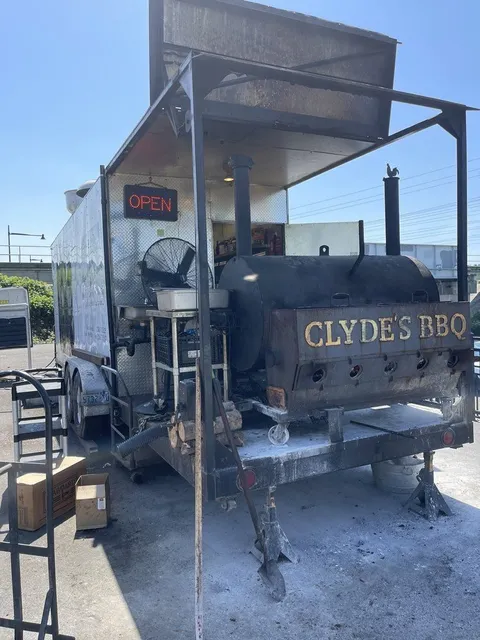
A site assessment, then a fixed engineered quote. We measure sightlines and viewing distance, verify power and structure, confirm the content plan and network, and send one number with the electrical, cabling and mounting included. The wall at Clyde's BBQ in the South Sound went in that way. Our commercial AV work for Tacoma is on the Tacoma commercial AV page.
Need it installed?
Rivas Technology Group designs and installs commercial video walls in Tacoma, Kent and across south King County and Pierce County, with the electrical and network work done under our license. Book a site assessment and we will turn the drivers above into one price.