

Project: outdoor Wi-Fi on the Olympic Peninsula
Outdoor Wi-Fi across a Sequim property,
with no cell signal to fall back on
A large property in Sequim with no cell coverage needed Wi-Fi that reached the grounds, not just the rooms. In an earlier phase we pulled fiber between the buildings. In this phase we mounted directional Ruckus Wi-Fi 6 access points on the building nearest the middle of the property and aimed each one at the areas that had to be covered.
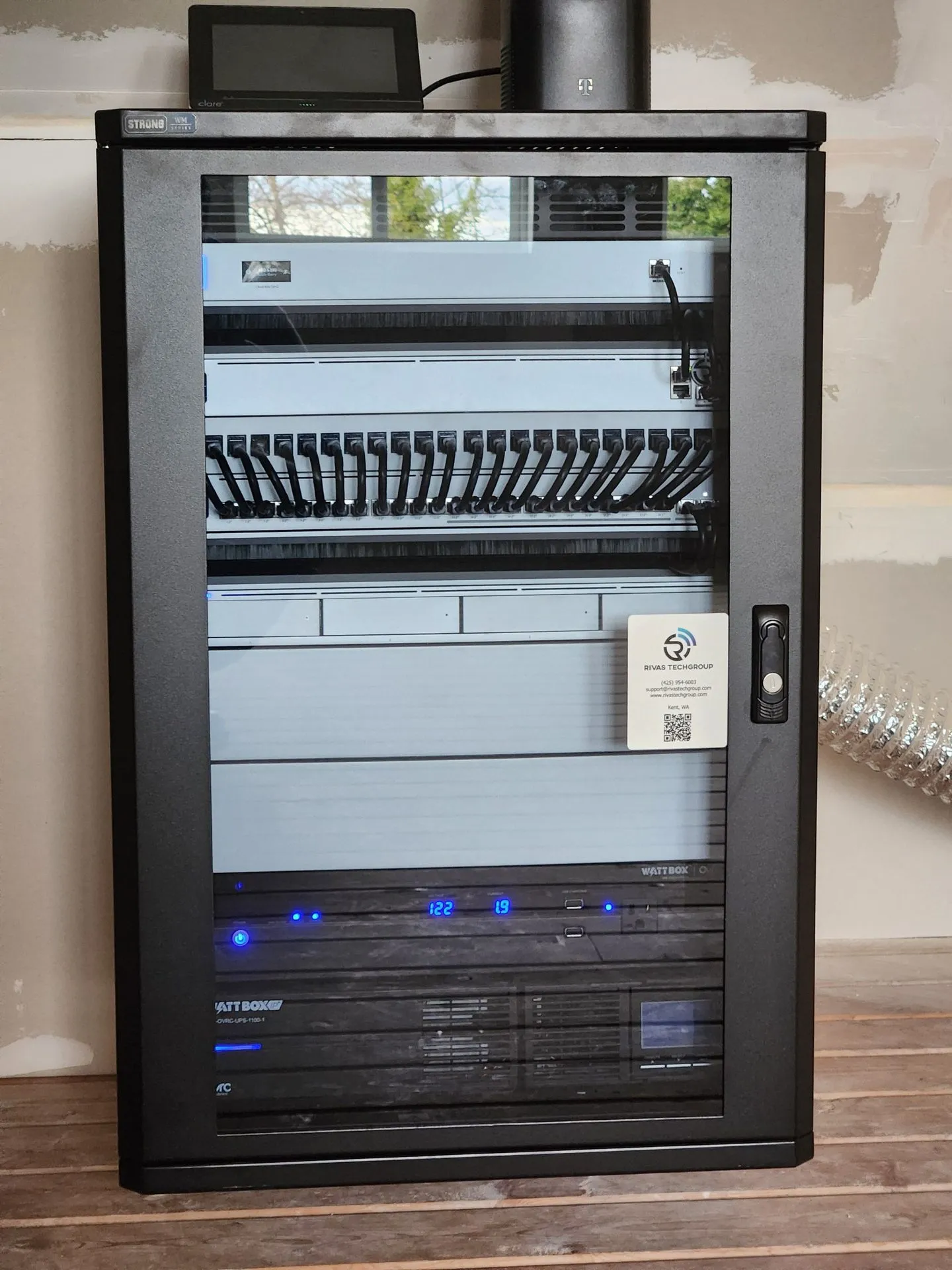


Rivas Technology Group installed outdoor directional Ruckus Wi-Fi 6 access points on a large property in Sequim, WA. The building carrying them sits near the middle of the grounds, on fiber pulled in an earlier phase. Each sector antenna is aimed at an area that needed coverage, so the whole property has Wi-Fi where there is no cell signal.
- Client
- Private property
- City
- Sequim, WA, on the Olympic Peninsula
- Scope
- Outdoor directional Ruckus T350se Wi-Fi 6 access points, pole mounts, PoE, on fiber between buildings
- Earlier phase
- Fiber pulled between the buildings
- Result
- Wi-Fi across the required outdoor areas on a property with no cell coverage
What was the problem?
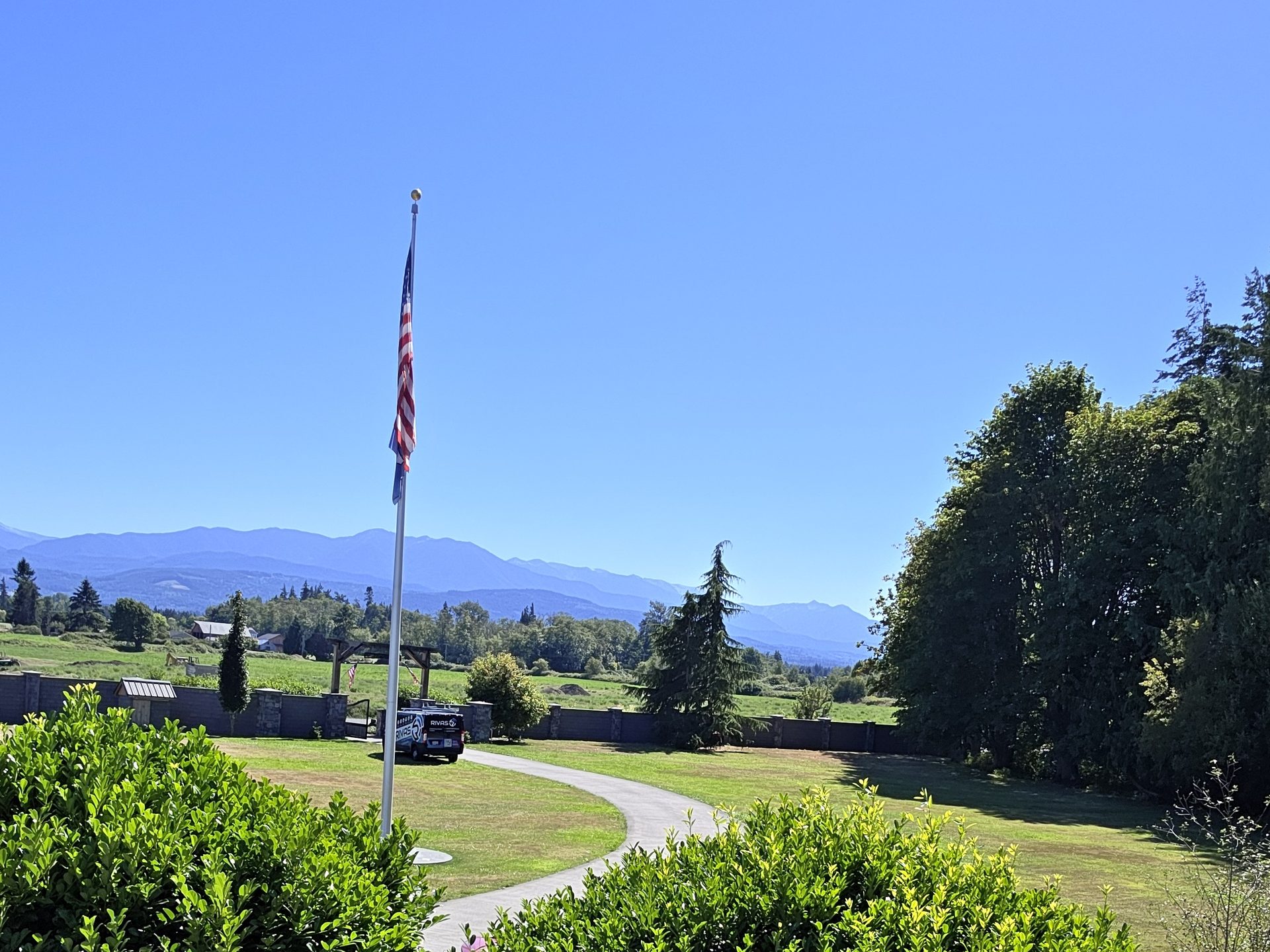
A large property in Sequim, on the north side of the Olympic Peninsula, with no cell coverage. Indoors the buildings had a network. Outdoors, across the lawns, drive and grounds, there was nothing: no phone signal to fall back on and no Wi-Fi past the walls. The owner needed coverage across specific outdoor areas, reliable enough to carry calls and devices, without a tower.
What did we design?
Directional coverage from one point. The building that already carried fiber sits near the middle of the property, so it became the mount. Each access point is a sector antenna aimed at one required area, and the set of them covers the grounds without an omnidirectional unit wasting half its power on the sky and the trees. The fiber between buildings, pulled in an earlier phase, means every access point is wired back to a switch with no wireless relay in the chain.
What did we install?
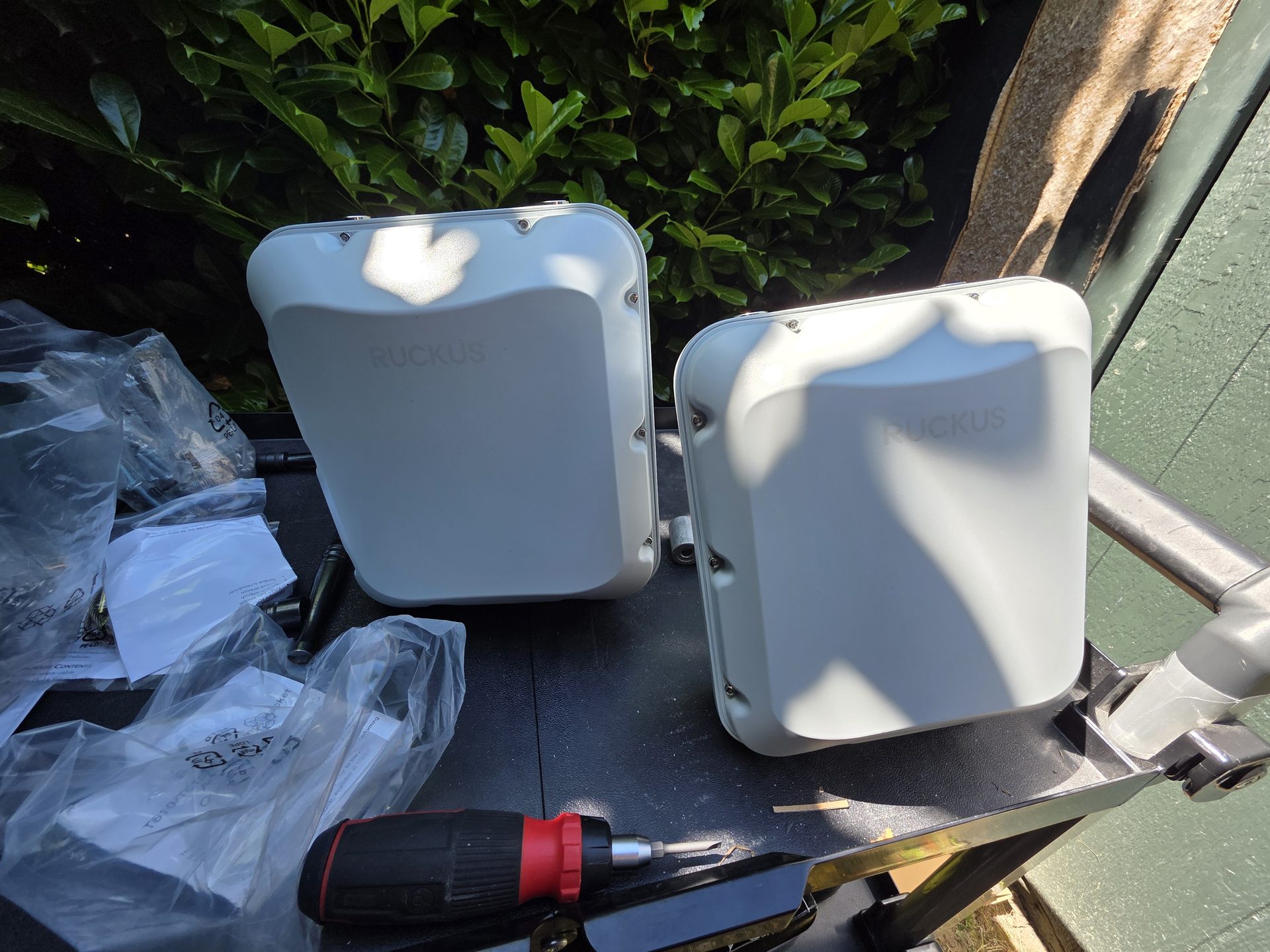
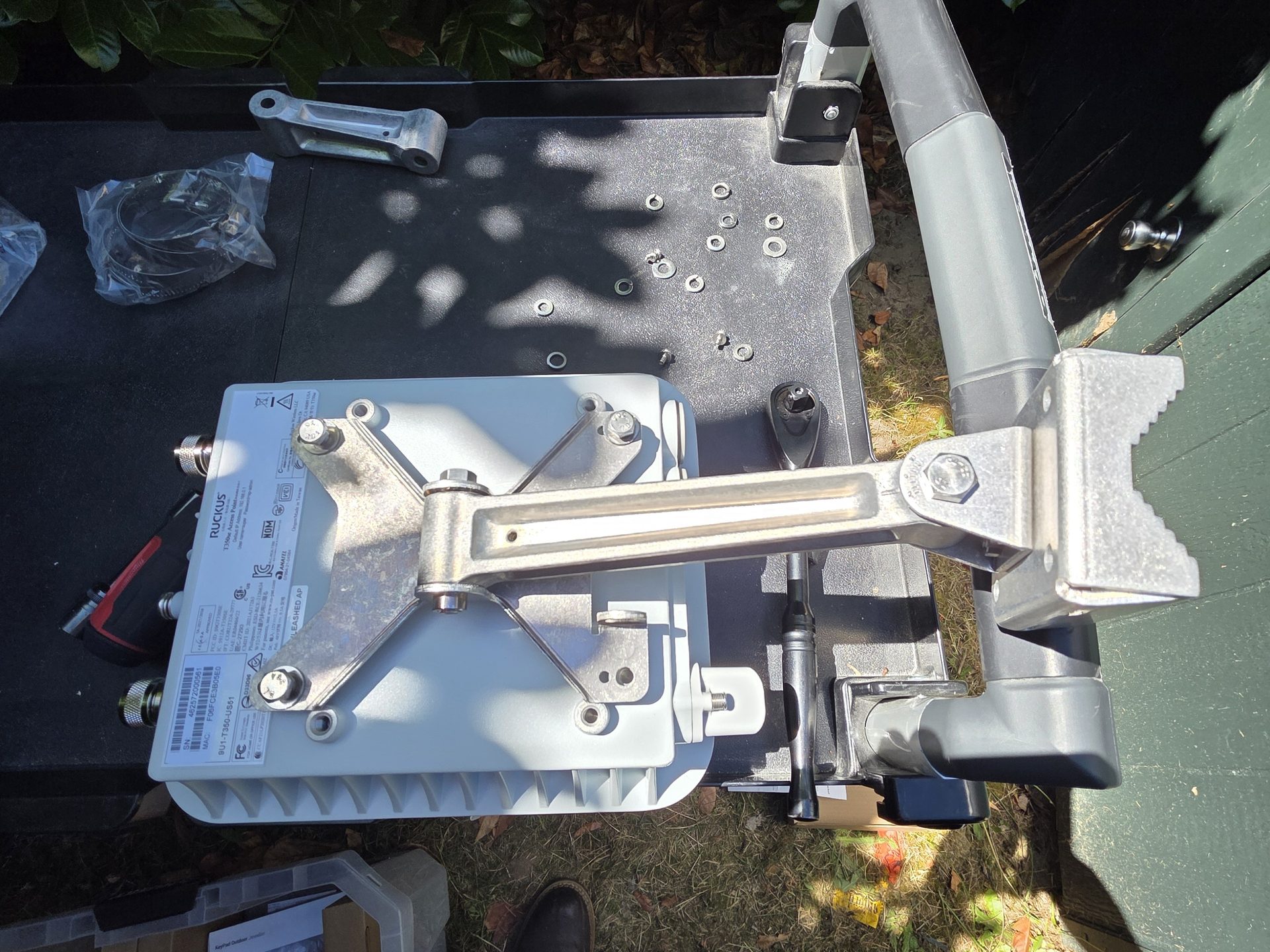
Ruckus T350se outdoor access points: Wi-Fi 6, a 120-degree internal sector antenna, IP-67 sealed, rated from -40 to 149 °F, powered by PoE+1. Each is on an articulating pole mount above the roofline, so the aim can be adjusted after a walk with a signal meter. The outdoor cable is run in conduit to the mount, with surge protection at the building. The access points are managed on the same platform as the indoor network, so one system covers the whole property.
What changed?
The grounds have Wi-Fi where they had nothing. Phones work outdoors on a property with no cell signal, devices on the grounds stay connected, and the coverage lands where it was needed instead of where an omnidirectional unit happened to reach. Because the backbone is fiber and the mounts are adjustable, adding a sector later is a bracket and a cable, not a redesign.
Where is this project?
Sequim, WA, about two and a half hours from our office at 415 Railroad Ave S in Kent by the Kingston ferry or Tacoma Narrows. We serve Sequim, Port Townsend and Port Angeles by appointment, planned in full days, on the Olympic Peninsula page. The same outdoor design is used on large lots and acreage in Gig Harbor, Bonney Lake and Maple Valley.
What drives the cost of a project like this?
The number of sectors, the mounting and cable paths, and whether a backbone exists. A property with fiber or Ethernet already between buildings is the cheap case: the access points, the mounts and the PoE switch ports. A property without one needs the backbone first, on the fiber to the jack page or the networking page. Everything ends in a fixed proposal after a survey.
Similar project?
Acreage, farms, waterfront lots and estates with outbuildings get the same design: survey the areas that matter, mount sectors where they can see them, wire every access point back to a switch. Where there is no cell signal, the Wi-Fi carries the phones too. The outdoor living page covers the audio, lighting and TV that ride on the same network.
Why Rivas Technology Group
WA electrical contractor license RIVASGL799DR, active, bonded and insured2. Ruckus, Alta Labs and Ubiquiti UniFi are the access points we install, on wired backbones we design and document. Remote support through CURATOR means a Peninsula property is watched from Kent between visits.
Questions we hear
Why directional access points instead of omnidirectional?
Because the areas that needed coverage were in known directions from one building near the middle of the property. A sector antenna puts its signal where it is aimed, with a 120-degree beam on the Ruckus T350se, so each access point covers a defined area instead of spraying signal at the sky.
What did the earlier phase do?
It pulled fiber between the buildings. That gave the property a wired backbone with no wireless hops, so the outdoor access points hang off a switch in the nearest building instead of relaying through each other. The fiber phase is what made this phase simple.
Why does no cell coverage matter?
Because on this property Wi-Fi is the only signal. Phones, security devices and anyone working the grounds depend on it. That raised the bar for placement and for the hardware: outdoor-rated, powered over Ethernet, and reachable for service without a ladder truck.
What hardware is on the pole?
Ruckus T350se outdoor access points: Wi-Fi 6, a 120-degree sector antenna, IP-67 sealed, rated from -40 to 149 °F and powered by PoE+1. Each one is on an articulating pole mount so the aim can be adjusted after a survey walk.
Do you take on projects in Sequim?
By appointment. Our office is in Kent, WA, about two and a half hours away, so Peninsula work is planned in full days after a phone consultation and a site visit. The Olympic Peninsula page explains how that works.
Similar property? Start with a survey.
Tell us the address, the areas that need coverage and whether there is cell service. We survey the property, then send a written proposal. We call or text back within one business day.