Business security
Alarm or cameras for a construction site? The question is which one first.
Most contractors ask us for cameras and describe a problem an alarm solves. The two are layers of one system rather than rivals: the alarm decides that something is happening, the video shows what it is, and together they are what gets a police response. Here is how to tell which layer your site needs first, and when you want both.
Intrusion detection and video are layers of one system, not alternatives. The alarm decides something is happening, the video shows what it is, and a verified alarm is what earns a priority police response. For a job site with no power and no internet, the alarm layer usually goes in first, because it is what interrupts a theft rather than documenting it. Video is added where footage is required for a claim, a licence or a dispute, or where a site is large and open enough that a camera on a mast sees what ground detectors cannot.
By Ivan Rivas, Owner and Sales Engineer · 2026-09-23 · Updated 2026-09-23
The difference in one line
An alarm answers "is it happening right now". A camera answers "what is it". Put them together and you have the thing that actually gets somebody dispatched.
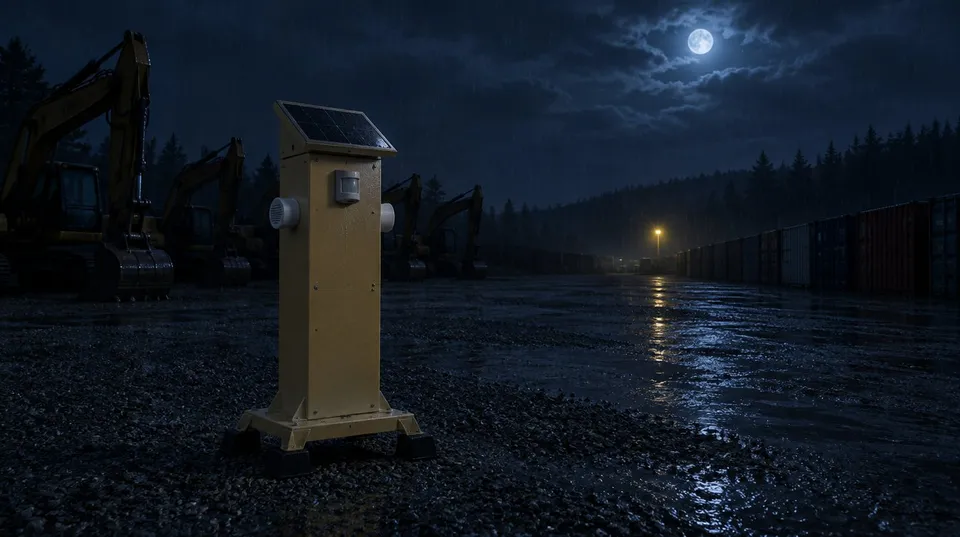
That sounds like a small distinction until you are the one deciding at 6 a.m. whether to call the police about a gap in the fence. With a camera you have footage of a truck you cannot identify, taken six hours ago. With an alarm you had a phone buzzing at 11:40 p.m. with a photo of someone in the laydown yard, and a siren going off where they were standing.
Neither is the whole answer on its own. An alarm with nothing to look at gives you a siren and a guess. A camera with nothing to trigger it gives you hours of footage nobody watches. The reason most job sites end up with the wrong thing is that "security" and "cameras" have become the same word, so the detection layer never gets specified at all.
When cameras are genuinely right
When you need footage. An insurance carrier that names video, a project requirement, a licence condition or a dispute you can see coming. Footage is evidence, and nothing else substitutes for it.
When the ground is open and wide. A camera on a 25 ft mast sees across a lot in a way nothing at fence height can. If your risk is spread over acres rather than concentrated in a yard, height is doing real work.
When you want to watch progress, not just intrusion. Plenty of contractors run cameras for the schedule rather than the theft, and that is a perfectly good reason to have one.
When the alarm layer goes in first
When the site is empty at night and the value is concentrated. A laydown yard, a container row, a materials cage, a compound, a gate. The question is not what happened but whether someone is in it, and an alarm is the only thing that answers that while it still matters.
When there is no power and no internet. This is the practical one. Video needs enough power to run cameras and enough bandwidth to push it somewhere, which on an off-grid site means a bigger solar array, a bigger battery and often a generator. An intrusion alarm sends a short alert with a still image, so the same job is done by a small panel and a battery that lasts years.
When you do not want footage of your own crews. Continuous recording of a working site raises questions some contractors would rather not have to answer. An alarm that only fires when the site should be empty sidesteps that entirely.
The running cost nobody quotes you
The purchase price is the easy part. What differs is what it takes to keep each one alive through a Puget Sound winter.
Washington gets about 6.37 peak sun hours a day in July and 1.32 in December1. An off-grid device collects roughly a fifth of its summer energy in December while its load stays exactly the same. Cameras and a recorder draw far more than a handful of detectors and a hub, so December bites a camera system much harder. That is why solar camera trailers come with generators or need shore power, and why an alarm tower does not.
Ask any vendor quoting you an off-grid camera system what happens in December, and listen for whether the answer is a bigger array, a generator or a shrug.
Where the two meet
Verification. An alarm on its own tells a central station that a contact opened. An alarm carrying an image tells them a person is standing in the laydown yard, and that is a different phone call to the police. This is why photo verification exists on the tower, and it is the same principle at a larger scale when video is bridged into the alarm so an operator sees the clip the detector triggered.
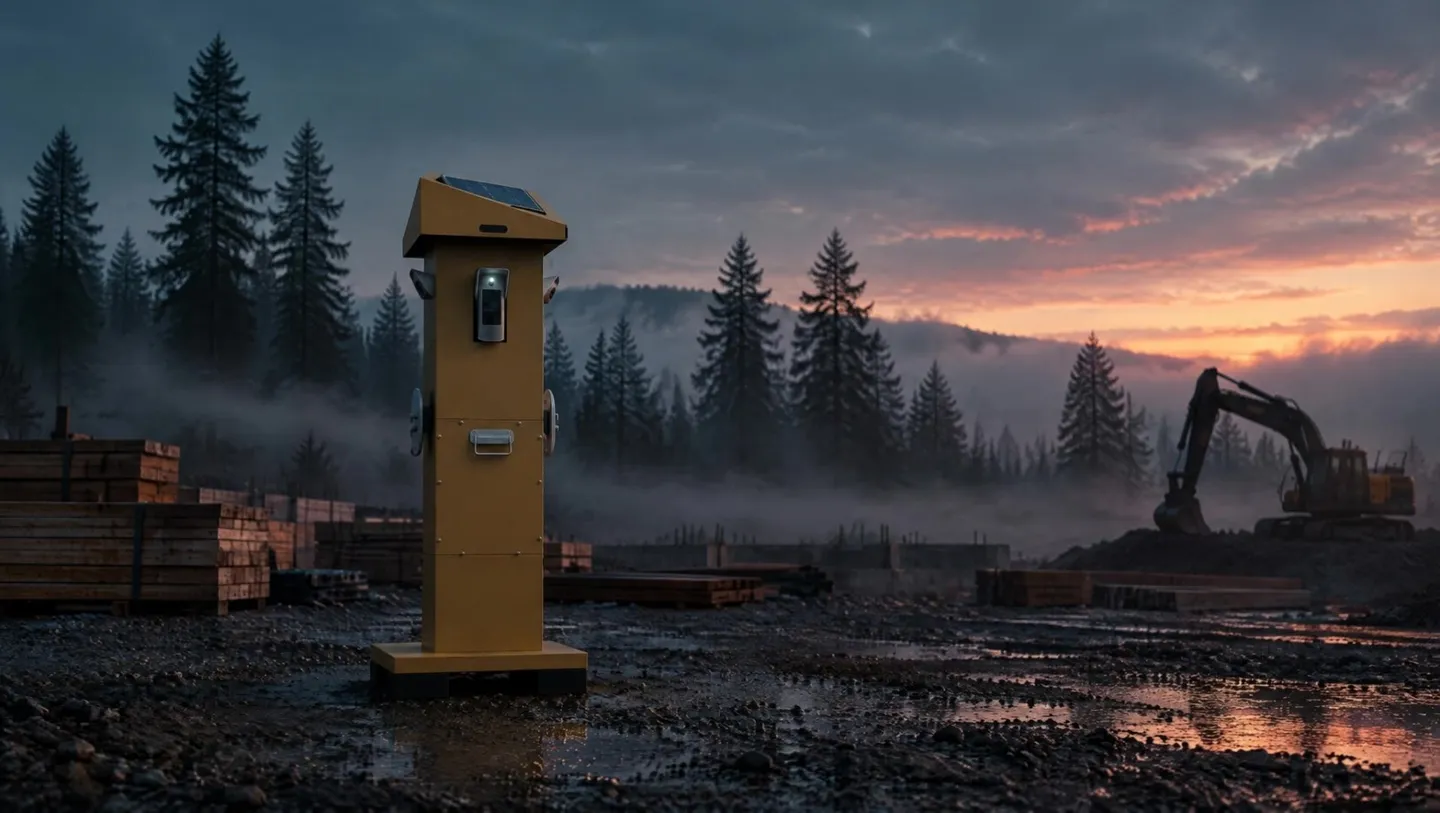
What the tower gives you today is the detection layer and a still image with every alarm, which is enough to decide whether to call anyone at 2 a.m. Where a site wants video brought into that loop, it is designed with the alarm rather than bolted alongside it.
What we would put on a South Sound site
The detection layer first: an alarm with photo verification, with detectors covering the areas that hold the value, sirens on site, and the alert with a picture on the superintendent's phone over cellular. Then video where the site or the paperwork calls for it, designed by the same people rather than bolted on by somebody else.
The honest limit on the alarm side is worth stating. It does not put a person on your site. The siren sounds and your phone rings, and if nobody answers at 3 a.m. nothing further happens unless you add monitoring, where a central station reviews the photo and dispatches. That is an option rather than an assumption, and it is the question to ask any alarm vendor before you sign.
Where we work
From 415 Railroad Ave S, Kent, WA 98032: Kent, Renton, Tukwila, Federal Way, Auburn, Covington, Maple Valley, Tacoma, Puyallup, Sumner, Bonney Lake, Tehaleh, University Place and Gig Harbor.