Business security
What actually gets stolen from a job site, and why you rarely get it back.
Tools, heavy equipment and building materials make up more than 63 percent of construction theft incidents in the research. The recovery rate is the part that should worry a general contractor: about one in five for registered equipment, and far worse for everything else. Here is what the numbers say, what they do not say, and what changes the outcome on a South Sound site.
Tools, heavy equipment and building materials account for more than 63 percent of construction site theft incidents. The National Equipment Register and NICB recorded 2,442 recoveries from 11,574 reported equipment thefts, about 21 percent, and research using NIBRS data puts recovery below 7 percent for most site thefts. Fuel recovers at 1.7 percent and non-precious metals at 6.5 percent. The practical conclusion for a contractor is that prevention and early detection matter far more than reporting, because most of what leaves a site never comes back.
By Ivan Rivas, Owner and Sales Engineer · 2026-09-23 · Updated 2026-09-23

The categories, in order of how often they go
Research on construction site theft incidents puts tools, heavy equipment and building materials at more than 63 percent of cases1. Underneath that heading, the recurring targets are the ones any superintendent could list from memory: power tools, copper, lumber, generators, skid steers, excavators, trailers, plumbing and electrical supplies, and fixtures once they arrive on site.
The pattern is not sophisticated. Most of what goes is what two people can lift into a truck in ten minutes, which is why the laydown yard and the materials cage matter more than the gate.
The number that should actually worry you
Not the loss. The recovery.
The National Equipment Register and the NICB recorded 2,442 recoveries out of 11,574 reported equipment thefts, about 21 percent. That is for registered, serial-numbered machinery, which is the best case. Work using NIBRS incident data found recovery below 7 percent for most construction site thefts. It broke down in a way worth reading twice: trucks recover at 54.8 percent, non-precious metals at 6.5 percent, and fuel at 1.7 percent.
Put plainly: if it has a VIN, you might see it again. If it is copper, a pallet of fixtures or a tank of diesel, you will not.
What the numbers do not say
The figure you will see quoted everywhere is "$300 million to $1 billion a year". It comes from NER and NICB as of 2016, and it covers machines only. It excludes tools, materials, the damage done getting in, and the cost of a crew standing around on Monday waiting for a replacement.
We could not find a citable Washington State or Seattle and Tacoma figure that separates construction site theft from general property crime. If a vendor quotes you a local number, ask them for the source. We would rather tell you the data is thin than invent a statistic about your own back yard.
Why insurance is not the answer either
A claim covers the asset at depreciated value. It does not cover the two days the framing crew could not work, the rescheduled inspection, the concrete pour that moved, or the deductible. On a tight schedule the delay usually costs more than the tool, and no policy pays for a slipped critical path.
That is the real argument for detection over documentation. A camera gives you evidence for a claim you did not want to file. An alarm gives you a chance to stop the claim happening.
What changes the outcome on a South Sound site
Three things, in order of how much they matter.
Make it harder. Fencing, lighting, and not stacking the valuable material against the fence line where it can be lifted over. None of this is exciting and all of it works.
Know while it is happening. A site that sits empty from 5 p.m. Friday to 6 a.m. Monday has sixty-one unwatched hours in it. The difference between a $4,000 loss and a $40,000 one is usually whether anyone found out before the second trip.
Make the knowing trustworthy. An alert nobody believes gets ignored by week three. That is the practical argument for photo verification. The alarm arrives with a picture of what set it off, so a person in the laydown yard and a tarp in the wind do not look the same on a phone at 2 a.m.
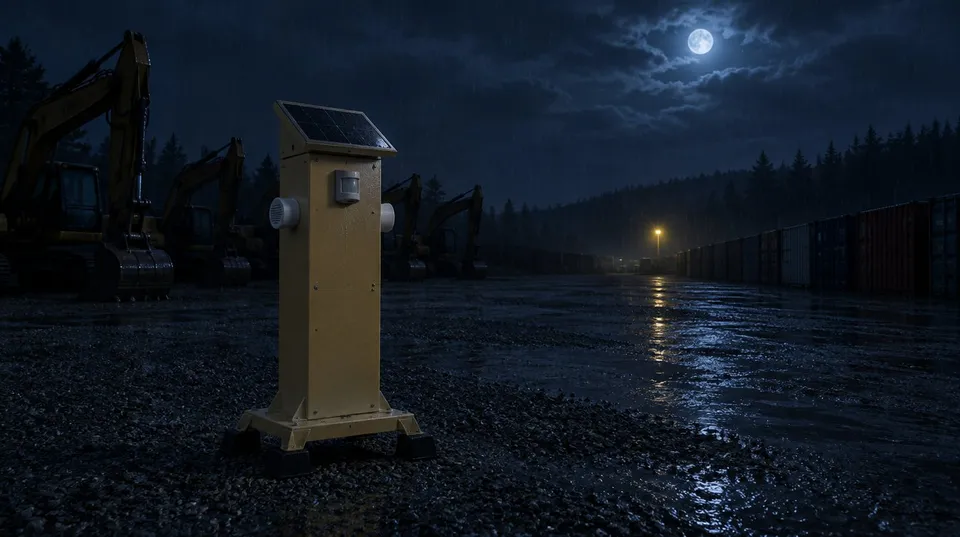
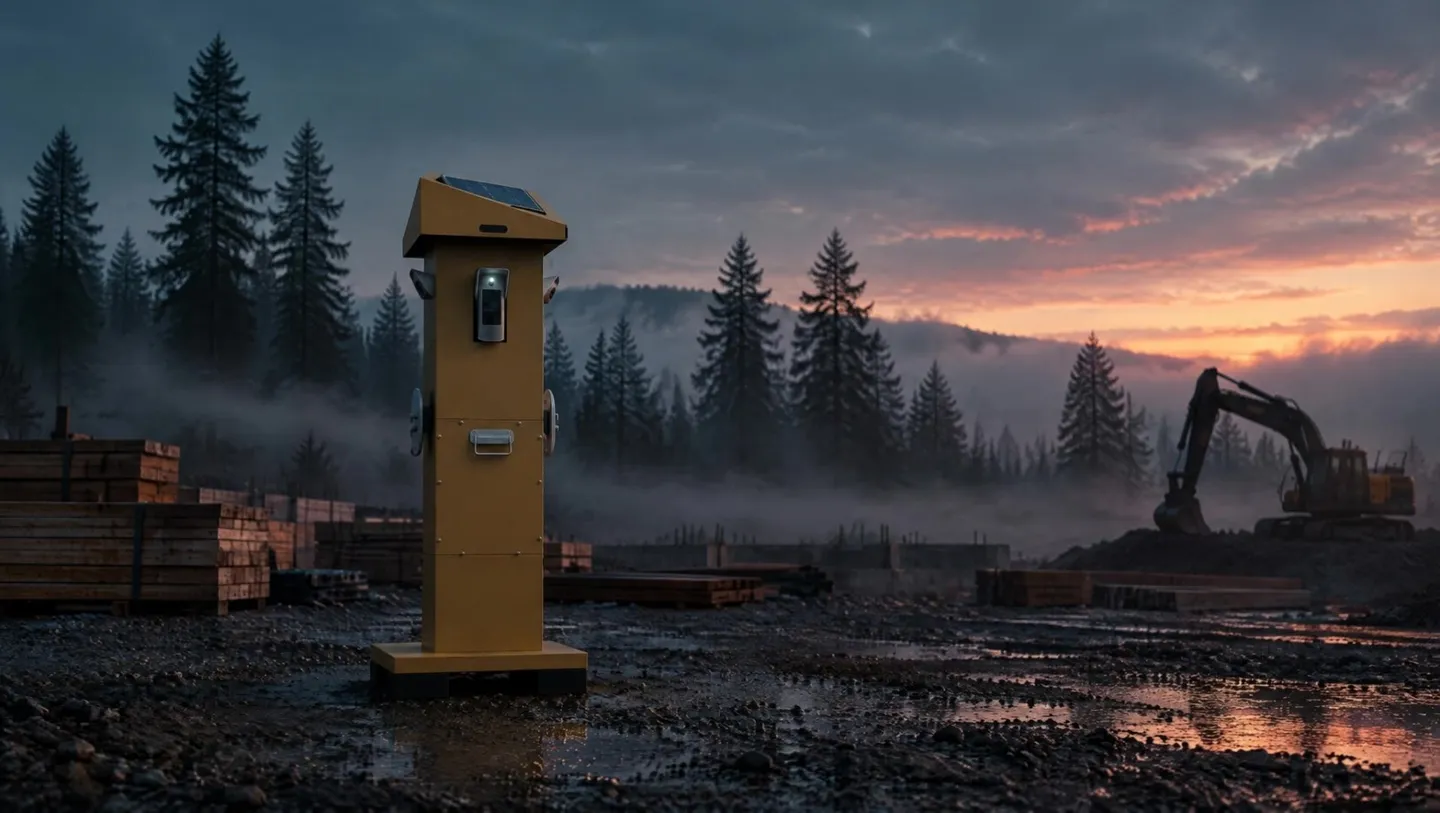
A solar alarm tower does that on ground with no power and no internet, which describes most sites before the service comes in. The whole approach, including when it is the wrong answer, is on construction site security.
Where we work
From 415 Railroad Ave S, Kent, WA 98032, about 30 minutes from most South Sound sites: Kent, Renton, Tukwila, Federal Way, Auburn, Covington, Maple Valley, Tacoma, Puyallup, Sumner, Bonney Lake, Tehaleh, University Place and Gig Harbor.