

Commercial access control systems, Kent WA and Tacoma
Commercial access control.
Keys you can take back.
Staff open the doors with a card, a phone or a PIN. A departed employee loses access the same afternoon, a cleaner's code stops working at 9 p.m., and every door keeps a log of who opened it and when.
Access control jobs, and the systems around them.


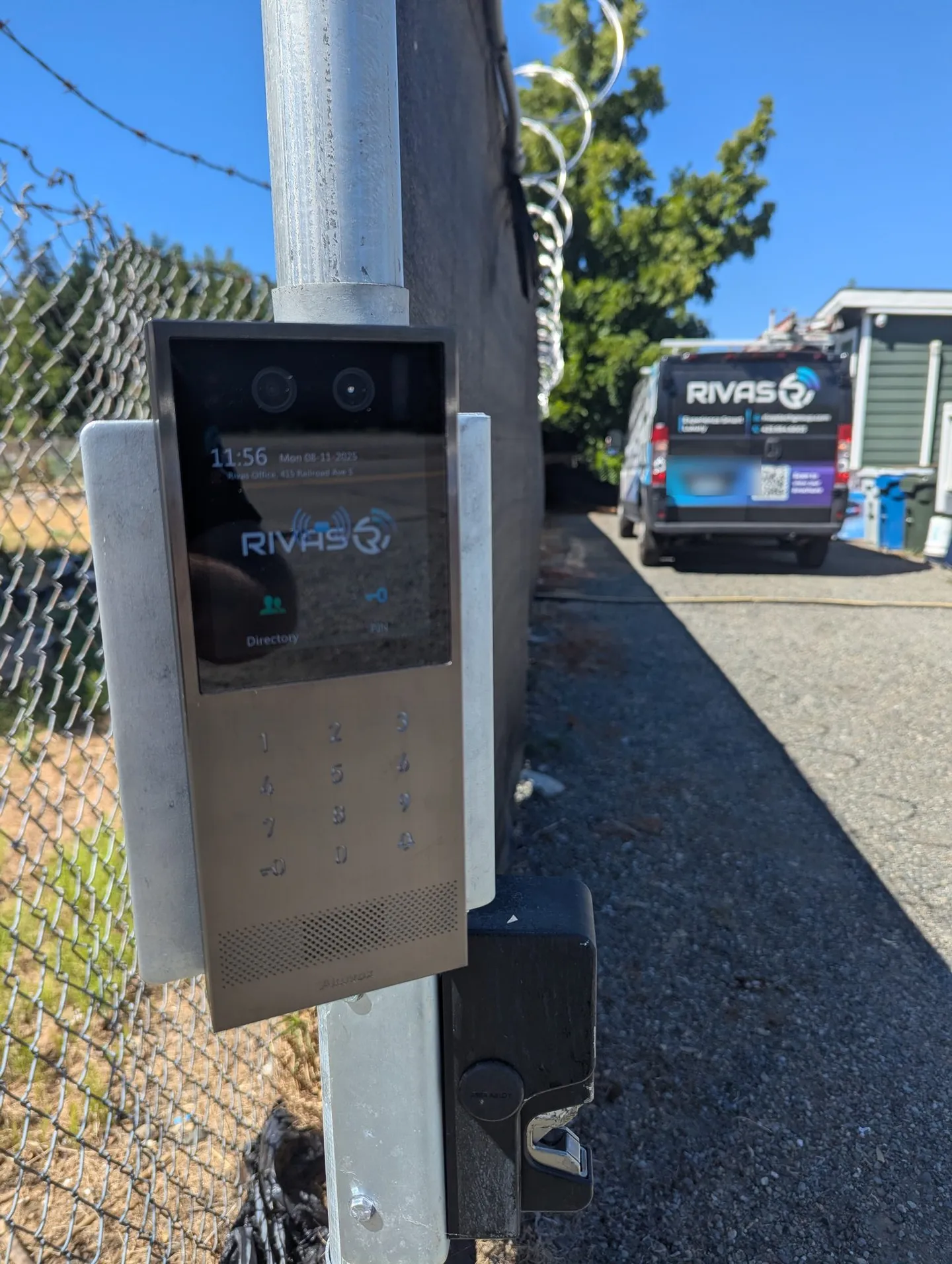


Rivas Technology Group installs commercial access control for offices, shops, clinics and warehouses in Kent, Tacoma and the South Sound. Each door gets a reader, a controller and an electric lock, and staff open it with a card, phone or PIN. We install UniFi Access or Akuvox, whichever fits the building.
- Credentials
- Cards and fobs, phones, PINs; face and QR codes on Akuvox models
- Platforms
- UniFi Access for offices on UniFi; Akuvox where the entry needs a video intercom
- Per door
- A reader, a controller, an electric strike or maglock, and a door position sensor
- Records
- An audit log per door: who, which door, what time
- Installer
- Akuvox certified intercom installer (ACIA and ACII)
- License
- WA electrical contractor RIVASGL799DR, bonded and insured
Why replace keys?
Keys do not expire, do not keep a record and cannot be taken back from a desk. When an employee leaves with a key, the choice is to trust them or rekey the building. When something goes missing overnight, nothing says whose key opened the back door.
Access control fixes those three things. Every person carries their own credential. You issue it and revoke it from a dashboard. Every door keeps a log of who opened it and when, which is the question a manager asks after a shortage.
What goes on each door?
Four parts. A reader at the frame takes the credential. A controller, usually above the ceiling or in a closet, decides whether that person may open that door at that time. An electric lock releases the door. A door position sensor reports whether the door actually opened and whether someone propped it.
The lock depends on the door. A door that already has an electric strike is the easiest and cheapest case. A glass or aluminum storefront door often takes a maglock, which needs its own power supply. A roll-up or gate takes a relay into the operator. We note each door's frame, lock and cable path on the walk-through, so the proposal prices each door on its own line.
UniFi Access or Akuvox?
We install both, and the building decides.
UniFi Access is door control that runs on a UniFi console, the same dashboard an office already uses for its network1. A hub per door drives the lock and reads the door sensor, powered over Ethernet2. Staff use an NFC card or fob, the UniFi Identity app, or a phone in Apple Wallet or Google Wallet, which Ubiquiti calls Touch Pass3. It fits an office or clinic that already runs UniFi and needs credentials on its own doors, as at Binaytara in Bellevue.
Akuvox starts from the video intercom. A door phone at the entry shows a visitor's face, lets a courier in with a time-limited code, and opens by face, card, PIN, phone or QR code. It fits a front entry that visitors and deliveries use, a gate, or a building shared by several tenants. At a gate on Mercer Island we replaced an old Sentex callbox with an X912S without trenching the driveway. We are an Akuvox certified installer, and the models are on the intercom and access control page.
Some buildings use both: an Akuvox door phone at the public entry and card readers on the interior doors.
For doors that do not need a wired reader, such as a private office or a supply room, we recommend Alfred locks. The ML2 mortise lock opens with a PIN, an RFID card or a phone over Bluetooth, and holds up to 250 PINs and 250 cards4. In a building on Control4, a Control4 driver for Alfred locks, developed by Rivas Technology Group, is in field testing on our projects.
Schedules, shifts and visitors
A front door can open to the public at 8 a.m. and lock itself at 5 p.m. Warehouse staff can open the dock door on their shift and not on Sunday. A cleaning crew can get a code that works on Tuesday and Friday evenings only.
Visitors and vendors get time-limited credentials instead of a spare key. On Akuvox, a visitor code or QR code can be sent from the app and expires on its own. The log records each use, so a vendor's visit is on the record without anyone at the door.
Where it pays off first
Offices and clinics: interior doors to server rooms, records and medication storage, where who went in matters as much as keeping people out. Shops and restaurants: the back door, the office and the stockroom, which is where losses happen. Kent Valley warehouses and shops: the staff entry and the dock door, often on a schedule that follows the shifts. Multi-tenant buildings: a shared entry with a directory, covered on the multifamily page.
Exits, fire alarms and power cuts
People must always be able to get out. Exit doors have to open from the inside without a key under the building code, so the hardware on an exit path is chosen to keep that true. A request-to-exit sensor or a handle on the inside releases the door, and the log shows it.
What a lock does when power fails or the fire alarm sounds is set door by door. A maglock releases when power drops, which is called fail-safe. An electric strike usually stays locked, fail-secure, and the inside handle still opens it3.
Doors keep working through a power cut only on battery backup, such as a UPS on the network switch. On UniFi Access, door permissions are stored on the hub at each door, so the doors keep working if the main console goes down3. Where a door is on a fire-rated or required exit path, we confirm the hardware with the building or fire official before installing it.
With your alarm and cameras
Access control, the alarm and the cameras do different jobs, and they work best as layers. The access system decides who may open a door. The alarm decides that something is wrong after hours. The cameras show what happened.
We connect them at the system level. A door contact on a controlled door can report to the Ajax alarm, so a door forced open at night is an alarm, not just a log entry. A reader or intercom camera at the entry records the face that went with the card. Cameras are on the security cameras page.
What drives the cost?
Five things set the price of a door: the lock hardware, the reader, the cable run, whether the door already has an electric strike, and the platform. A building on UniFi adds door hubs to a console it already owns. An entry that needs a video intercom costs more than one that needs a card reader. We do not publish a per-door price. The instant quote gives a first figure in minutes, and the walk-through proposal itemizes every door.
Where we work
From 415 Railroad Ave S, Kent, WA 98032: Kent, Tukwila, Renton, Auburn, Federal Way, Covington, Maple Valley, Tacoma, Puyallup, Sumner and Gig Harbor. Rivas Technology Group holds WA electrical contractor license RIVASGL799DR, active, bonded and insured.
Questions we hear
What is commercial access control?
A system that decides who may open which door, and when. A reader checks a credential, a controller compares it with the schedule, an electric lock releases, and the event is logged. It replaces keys with credentials you can issue and revoke from a screen.
Which is better for my business, UniFi Access or Akuvox?
It depends on the building. If your network already runs on UniFi and you need staff credentials on your own doors, UniFi Access fits. If the front entry needs a video intercom for visitors and deliveries, or several tenants share it, Akuvox fits. Some buildings use both.
Can we keep our existing doors and locks?
Usually the doors, yes. The lock hardware depends on the door. A door that already has an electric strike is the easiest case. A glass or aluminum storefront door often takes a maglock with its own power supply. The walk-through decides door by door.
What happens when an employee leaves?
You revoke their card, phone and PIN from the dashboard, and they stop working at once. Nobody rekeys the building. The audit log still shows every door they opened while they had access.
Can the doors lock and open on a schedule?
Yes. A front door can stay open to walk-in customers during business hours and lock itself at closing. Staff credentials can work only on their shifts, and a cleaner's or vendor's code can work only on set evenings.
Do people still get out in a fire or power cut?
They must, and the design makes sure of it. Exit doors have to open from the inside without a key under the building code. How a lock behaves when power or the fire alarm drops is set per door and confirmed with the building or fire official when needed.
Does it work with our alarm and cameras?
Yes, as one system in two apps. The door's open and closed state can report to an Ajax alarm through a door contact, and a reader or intercom camera at the entry shows who is there. We connect them at the system level, not with custom code.
Are there monthly fees?
It depends on the platform. Ubiquiti sells UniFi Access with no licensing fees, so you own the hardware and pay nothing monthly for the software. Akuvox's SmartPlus cloud portal, used for multi-tenant buildings, carries a subscription. Many cloud brands charge per door each month, so ask any bidder for the multi-year cost.
How much does access control cost per door?
It depends on the door hardware, the reader, the cable run and whether the door already has an electric strike. We do not publish a per-door price. The instant quote gives a first figure, and the walk-through proposal prices every door on its own line.
Start with a door walk-through.
Tell us the address, how many doors need control and what network the building runs. We walk every door with you, note the frame, the lock and the cable path, and send a proposal priced per door. We call or text back within one business day.