Smart home
Smart home or AI home: what is the difference?
A smart home executes rules you or your programmer wrote; an AI home has devices that learn from what they observe. Most well-designed homes are both. Here is where the line sits and which one your problem calls for.
A smart home runs rules you set, so sunset turns on the lights every time. An AI home has devices that learn from what they observe, such as cameras that classify a person and thermostats that learn occupancy. Most well-designed South Sound homes are both; Rivas Technology Group builds the rules on Control4 and the learning at the edges.
By Ivan Rivas, Owner and Sales Engineer · 2026-03-23 · Updated 2026-09-17

What is a smart home?
A smart home is a rule-based system: you define what happens and when, and it does exactly that every time. Sunset arrives, the exterior lights come on. Someone presses "Goodnight" and the thermostat sets back, the locks engage, the alarm arms and the lights fade over two minutes. On a Control4 system programmed by Nick Rhodes on our team, a home can carry hundreds of these scenes and triggers. The effect is that the lights are always right and the alarm arms itself.
None of that is intelligence. It is a precise set of instructions that runs as written, whether or not the instructions still match how you live. A smart home is reliable, predictable and powerful, and it cannot adapt without someone changing the program.
What is an AI home?
An AI home contains devices that observe, learn and act without being told each behavior. The key word is learn. A thermostat that builds its own schedule from when it sees you in each room. A camera that classifies what it sees on the camera itself and alerts on a person at the door, not a branch in the wind.
A recorder that tags every event so you search "vehicle, driveway, Tuesday night" instead of scrubbing footage. The practical difference: a smart home does what you told it; an AI home does what it worked out you need, and improves without reprogramming. Our AI smart home page lists the devices we install that do this.
Where does it get confusing?
Because most well-designed homes in 2026 are both, and the marketing blurs the two. Control4 is the rules layer; it executes scenes, schedules and cross-system triggers. The learning lives in the devices connected to it: the camera that classifies objects, the thermostat that maps occupancy, the NVR that indexes events. That split is the right architecture.
You want deterministic rules for lighting scenes and AV control, because a movie should start the same way every time. You want learning where the pattern is too variable to write as a rule, such as which motion outside is worth an alert. The mistake is expecting learning from a platform designed to be predictable, or expecting predictability from one designed to adapt.
Three questions to ask any vendor
- Does the AI run on the device or in the cloud? On-device processing is faster, private and works when the internet is down. Cloud processing adds delay and a subscription. If the vendor cannot answer, it is not AI.
- What does it learn, specifically? "It learns your preferences" is a slogan. "It maps room occupancy by time of day and pre-conditions the climate from that pattern" is an answer.
- How does it connect to the rest of the house? A camera that classifies a person and does nothing else is a feature. A camera that classifies a person and hands the event to a controller that runs lights, locks and notifications is a capability.
Which one do you need?
It depends on what frustrates you. If the complaint is that you have to remember things, arming the alarm, setting the thermostat, turning off lights, setting up movie night, a well-programmed smart home solves it completely. The complaint may be that the system alerts you for nothing, or that the house never feels right for how you live this month. Or you may want security that detects real threats and ignores the rest. Those are learning problems, because the rules you would need are too many and change too often.
Most homes we build in the South Sound get both. The rules layer handles the predictable routines reliably; the learning layer handles what needs to adapt; the network underneath carries both, which is why the network is designed first.
How does it fit together in practice?
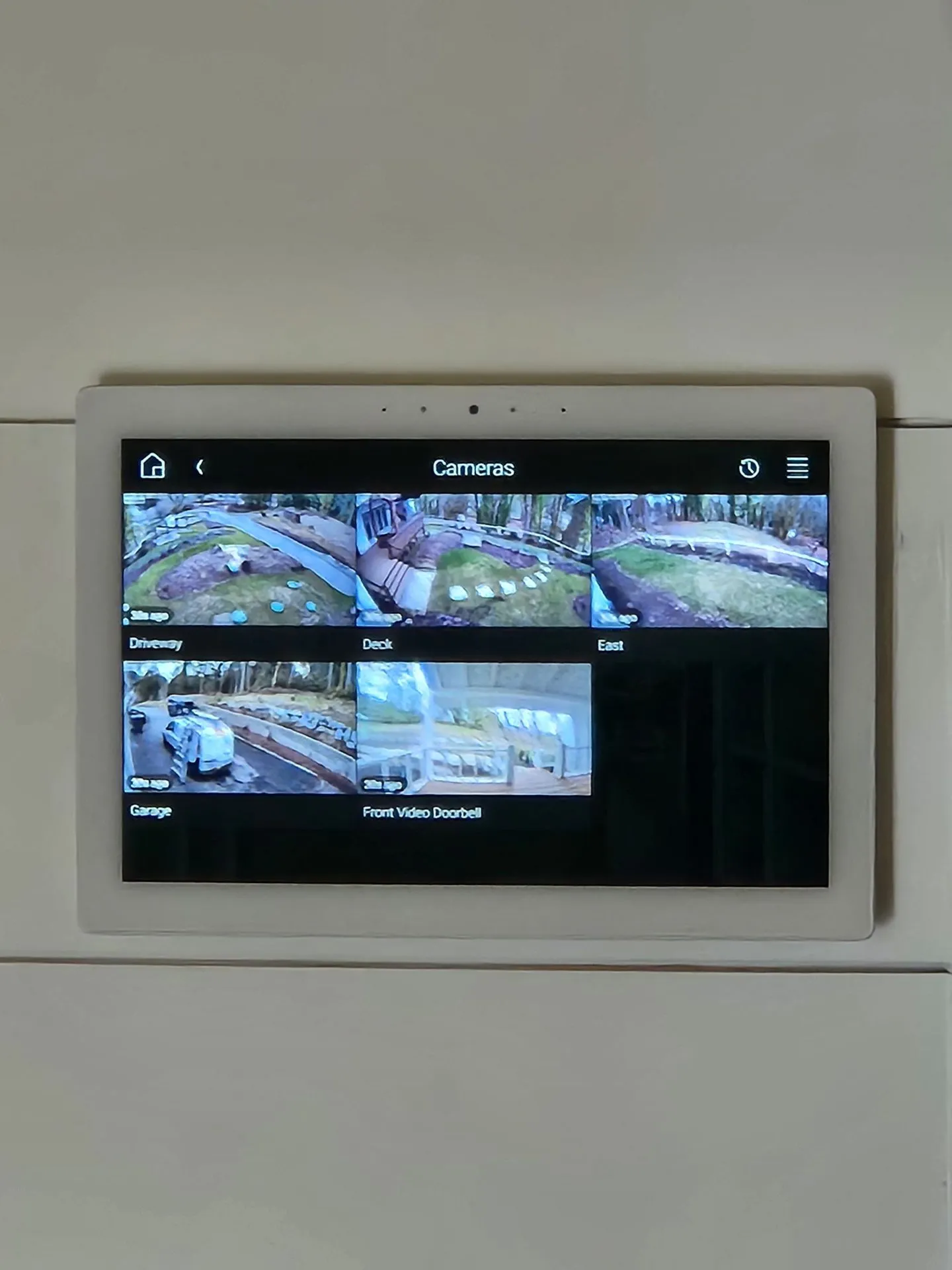
Take a front door in Tacoma at 9 p.m. The camera, on the device, recognizes a person and not a raccoon. It sends that event to Control4. Control4 runs the rule: turn on the entry light, show the camera on the kitchen screen, notify the phones. The alarm, from Ajax, is armed because "Goodnight" ran at 8:30, and its MotionCam would send a photo within 9 seconds of a trigger inside (Ajax MotionCam). The learning device decided the event mattered; the rules decided what to do about it. Neither is trying to do the other's job.
Need it installed?
Rivas Technology Group designs and installs AI-capable smart homes on Control4 from Kent across south King County and Pierce County. Book a walk-through and we will tell you which layer your house is missing.